Download
1 / 6
70 likes | 379 Vues
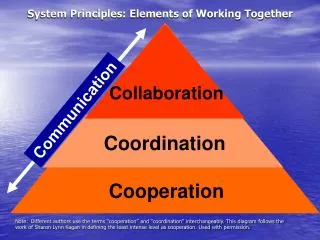
This diagram outlines the essential elements of cooperation, collaboration, and coordination in early childhood education, building on Sharon Lynn Kagan's insights. It highlights principles such as shared vision, mutual respect, effective communication, detailed planning, and resource management. Successful partnerships aim to align policies and practices across Child Care, Head Start, and state education systems to improve child and family outcomes. The emphasis on community-wide program sustainability ensures high-quality curriculum implementation and maximizes available resources for enhanced parental access and school readiness.

E N D
Note:Different authors use the terms “cooperation” and “coordination” interchangeably. This diagram follows the work of Sharon Lynn Kagan in defining the least intense level as cooperation. Used with permission. Collaboration Coordination Cooperation System Principles: Elements of Working Together Communication
PEOPLE SYSTEMS RESOURCES • Shared vision • Mutual respect • Attitude, beliefs and values • Skills • Knowledge • Effective communication systems • Detailed, comprehensive planning • Service delivery • Policies/Procedures • Ongoing evaluation and improvement • Adequate funding • Resource management • Time • Staffing • Environment: facility, space Key Elements of Successful Partnerships
RFPs Meetings $ Incentives Goals Decision making Needs Assessment Oversight Laws Policies Contracts Requirements Standards MOUs Professional development T/TA Vision Partnering at the State Level Family Strength Improved Child and Family Outcomes Education Mental Health Aligning policy and practice across Child Care, Head Start and State Education—PreK Health Nutrition QUILT 2003
Partnering at the Local Level CCDF Facility $ Foundations Vouchers Even Start Staff/resources Parent fees Non-federal share USDA State PreK ERF Local resources Family Strength Improved Child and Family Outcomes Education Mental Health Braiding funding and resources in Child Care, Head Start, and PreK Health Nutrition QUILT 2003
Partnering at the Local Level Curriculum Vision Child recruitment Parent education Policies/procedures Advocacy Staff development Program assessment Child screening Community assessment Public relations Facilities Purchasing Family Strength Improved Child and Family Outcomes Education Mental Health Health Braiding policy and practice among Child Care, Head Start, and PreK Nutrition QUILT 2003
Community-Wide Program Sustainability -More Highly Qualified Staff -Increased Staff Satisfaction -Decreased Staff Turnover Improved Professional Development RESOURCE SHARING (Facilities, Funding, Staff, etc.) IMPLEMENTATION of HIGHER QUALITY CURRICULUM COMMUNITY PARTNERSHIPS (MOU, Service Agreements) Reduced Duplication/Redundancy in Service Provision Maximization of Funding/ Resources Increased Parental Resources Improved Child Care Stability Improved Parental Workforce Outcomes Facilitated Parental Access to Care • Early Childhood Education • Pre-Kindergarten • Head Start • Child Care POSITIVE OUTCOMES FOR CHILDREN SCHOOL READINESS