Reproductive System
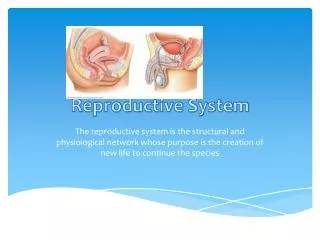
Reproductive System. ACCESS H.E. Human Biology. Introduction. Male and female reproductive systems are different in shape and structure, but both are specifically designed to produce, nourish, and transport either the ova or sperm.

Reproductive System
E N D
Presentation Transcript
Reproductive System ACCESS H.E. Human Biology. Clare Hargreaves-Norris
Introduction • Male and female reproductive systems are different in shape and structure, but both are specifically designed to produce, nourish, and transport either the ova or sperm. • Male reproductive system is located both inside and outside the pelvis. • Male reproductive system consists of: testes, duct system, accessory glands such as seminal vesicles and prostate, and the penis. Clare Hargreaves-Norris
Testes Clare Hargreaves-Norris
Duct system Clare Hargreaves-Norris
Scrotum Clare Hargreaves-Norris
Prostate gland Clare Hargreaves-Norris
Seminal vesicle Clare Hargreaves-Norris
Penis Clare Hargreaves-Norris
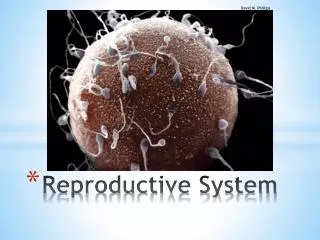
Sperm, male gamete (reproduction cell) Clare Hargreaves-Norris
Male Reproductive.wmv Clare Hargreaves-Norris
References. • Male Reproductive.wmv • Baggaley, A. (2001) Human Body. London: Dorling Kindersley. • Seely, R. et al. (1989) Anatomy and Physiology. USA: TimesMirror/MosbyCollege. • Tortora, G. and Grabolski, S. (1993) Principles of Anatomy and Physiology. USA: HarperCollins. • Tucker, L. (2002) Anatomy and Physiology. Cambridge: Holistic Therapy. Clare Hargreaves-Norris
Ovaries Clare Hargreaves-Norris
Follicle. • Small structures on the surface of the ovaries. • The follicles contain fluid and an ovum. • When an ovum is mature for fertilisation the follicle splits to release the ovum. • The mature ovum then travels along the Fallopian tube to the uterus. Clare Hargreaves-Norris
Fallopian tubes Clare Hargreaves-Norris
Uterus Clare Hargreaves-Norris
Vagina Clare Hargreaves-Norris
External genitalia Clare Hargreaves-Norris
Mammary glands Clare Hargreaves-Norris
Menstruation • When a baby girl is born, her ovaries contain hundreds of thousands of ova. • The ova remain inactive until puberty begins. • At puberty the pituitary gland starts making hormones. • The hormones stimulate the ovaries to produce female sex hormones, including oestrogen. • The secretion of these hormones causes a girl to develop into a sexually mature woman. Clare Hargreaves-Norris
Mensturation flows. • Towards the end of puberty, girls begin to release ova as part of the menstrual cycle. • Approximately once a month, during ovulation, an ovary sends a tiny ovum into one of the fallopian tubes. • Unless the egg is fertilised by a sperm while in the fallopian tube, the progesterone levels drop causing the egg to dry up. • The dried up ovum leaves the body about 2 weeks later through the uterus. • This process is called menstruation. • Blood and tissues from the endometrium of the uterus combine to form the menstrual flow. • This which usually lasts from 3 to 5 days. • On average, the monthly cycle for an adult woman is 28 days, but this may range from 23 to 35 days. Clare Hargreaves-Norris
Dysmenorrhoea. • Painful periods. • Many women also experience abdominal cramps during the first few days of their period. • These are caused by prostaglandin, a chemical in the body that makes the smooth muscle in the uterus contract. Clare Hargreaves-Norris
Fertilisation • Sexual organs of both sexes are required for reproduction. • The female ovaries produce female gametes (ova). • The male testes produce male gametes (sperm). • Natural fertilisation occurs after sexual intercourse when the penis deposits seminal fluid into the vagina. • The sperm have a tendency to swim towards the fallopian tube containing the ovulated ovum due to chemical signals that the sperm respond to. • They are also assisted in their journey by the cilia that are located in the cervix, wafting them along. • Once the sperm fuses with the ovum, the ovum membrane adjusts to prevent any other sperm from entering. • Zygote is the name given to a fertilised ovum. • The zygote develops into a foetus. • Pregnancy will develop over a 40 week period. Clare Hargreaves-Norris