Balancing Innovation and Efficiency in Value Creation: The M.A.R.G.I.N Approach
This document explores how to leverage Information Technology (IT) to create value through a strategic balance of innovation and efficiency. Utilizing the M.A.R.G.I.N framework—Find, Solve, Choose, Evaluate, and Execute—we analyze how firms can enhance customer relationships, improve operational efficiencies, and transform inputs into valuable products. It emphasizes that while innovation is crucial for market disruption, it must not be overshadowed by operational efficiency. Case studies from major firms illustrate how technology facilitates this balance, ensuring long-term competitive advantage.

Balancing Innovation and Efficiency in Value Creation: The M.A.R.G.I.N Approach
E N D
Presentation Transcript
M A R G I N Find Solve Choose Evaluate Execute M A R G I N Value Configuration Analysis Shop Network Resolve Customer Problem Facilitate Customer Relationships Chain Improve Internal Efficiencies
Firm Infrastructure Human Resources Management M A R G I N Technology Development Procurement Inbound Logistics Operations Outbound Logistics Marketing & Sales After-sales Service M A R G I N Value Chain Value created by transforming inputs into products
Value Shop Firm Infrastructure Human Resources Management InfrastructureSupport Technology Development Procurement Problem Finding & Acquisition Problem Solving Choice Simon’s Problem Solving Model Control/ Evaluation Execution Value created by providing solutions, not services
Value Network • Mediating technology facilitates exchange relationships Network promotion and contract management • Invite and select customers tojoin network • Initialize, manage andterminate contracts Firm Infrastructure Human Resources Management Technology Development Procurement Service provisioning • Establish, maintain andterminate links • Billing forvalue received Infrastructure operation • Maintain andrun physical and information network Value derived from service of linking customers
M A R G I N Find Solve Choose Evaluate Execute M A R G I N Value Configuration Examples Shop Network Resolve Customer Problem Facilitate Customer Relationships Chain Improve Internal Efficiencies
Do not confuse efficiency with innovation • “Price compression is killing innovation” • Michael Capellas, Compaq Computer CEO, Business Week (Sep 24, 2001), pg 102 • “Don’t mistake reinventing the wheel for innovation” • Related to Goldman Sachs $100 million investment in Webvan – current value $0 • Allan Sloan, “Dumb Deals 101”, Newsweek (Sep 10, 2001) pg 41
Types of Innovation(Christensen & Overdorf) • Sustaining Innovation • Respond to evolutionary market changes • Make a product or service perform better • Disruptive Innovation • Dealing with disruptive market changes • Create an entirely new market
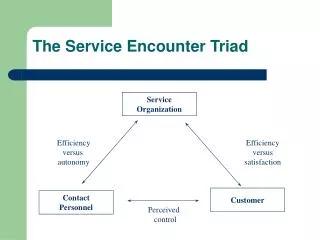
Innovation as Value Proposition • Three components of value proposition • Value Shop (VS) • Value Chain (VC) • Value Network (VN) • Total Value Proposition (TVP) is the product • ∆TVP = ∆VS * ∆VC * ∆VN • Disruptive innovation requires a new business model • Efficiency is incomplete sustaining innovation • VC is the focus
M A R G I N Find Solve Choose Evaluate Execute M A R G I N Value Configuration StrategiesWhere are Alibris and BBA? Shop Network Resolve Customer Problem Facilitate Customer Relationships Chain Improve Internal Efficiencies
M A R G I N Find Solve Choose Evaluate Execute M A R G I N Value Configuration Strategies Amazon: shared information Cisco: solves problems Compaq: mass production
M A R G I N Find Solve Choose Evaluate Execute M A R G I N Value Configuration Strategies Sun: Javaenablesinternet Amazon: shared information Cisco: solves problems EBay: auctionnetwork Napster: music distribution Dell: mass customization Compaq: mass production
Where does IT fit into this? • Use IT as a ready lever for efficiency improvement • By improving products and services • By improving operations • By improving the customer interfaces • Use IT as a lever to aid innovation • By making new benefits possible • By developing new processes • By creating new customer networks • Use IT to create new business model • Extended Value Chain • Value Shop • Value Network
Value Added Strategies VS VN VC
References • Chan K.W. and Mauborgne R. “Value Innovation: The Strategic Logic of High Growth”, Harvard Business Review, Jan-Feb 1997, pp 103-112. • Christensen, C.M. and Overdorf. M. “Meeting the Challenge of Disruptive Change”, Harvard Business Review, Mar-Apr 2000, pp 67-76. • Gobeli, D.H. & Rudelius, W. “Managing Innovation: Lessons from the Cardiac-Pacing Industry”, Sloan Management Review, 26:4 (Summer 1985), pp. 29 – 33 • Hansen, M.T. and von Oetinger, B. “Introducing T-Shaped Managers: Knowledge Management’s Next Generation”, Harvard Business Review, Mar 2001, pp 107-116. • Stabell, C.B. and Fjeldstad, O.D. “Configuring Value for Competitive Advantage: on Chains, Shops, and Networks”. Strategic Management Journal, 19 (1998), pp 413-437.
Preview for Next Week • 1:00 – 2:00: Open Source • 2:15 – 3:30: Ben Berry – Wireless Applications • 3:45 – 5:00: Outsourcing