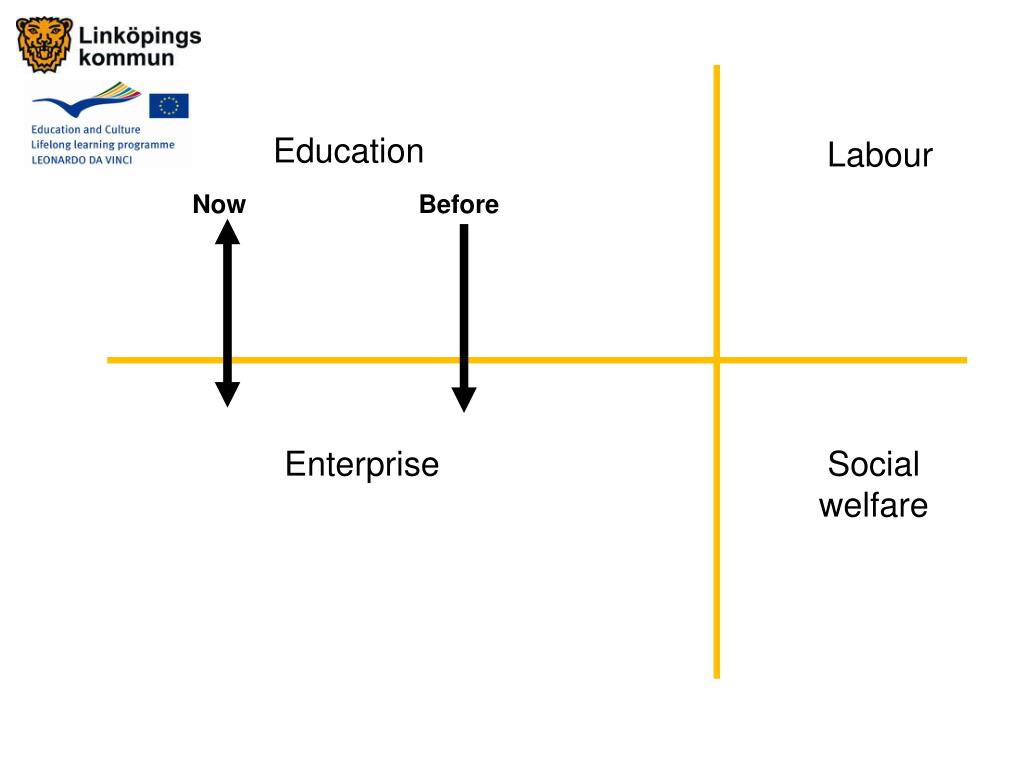
Education Labour Now Before Enterprise Social welfare
Preparations • Situation analysis • National guidelines • Population growth/demography • Futureneeds
Development keys Situation analysis • National policy documents • Order requirements • Own mission • Population growth/ demography • Communication • Participation • Influence New goals Goals Evaluation Development plan
Method for workplacelearning/development • Sustainabledevelopment approach– cooperationbetweenschools, activities for the elderly and unions • Commonaim/platform/contract/expectations • Continuity • Participation • Structure • Evaluation/Feedback
Conditions • Anchoring – all levels • Responsibilities – who doeswhat • Communication systems • Systems for follow up • Needsassessment • Common approach • Possibility to combineworking and learning • Awareness/competence – consequences • Development-orientedway to work
The team Tutor Cooperation, director, school, Students/homecareworker, Encouragement/support Learningsdiscussion Plans, evaluate • Director • Organize • Continualevaluation, • Cooperation, Planning, • Lessons, Meetings Elderlycare Quality, competence Assistant nurses Development-oriented approach, involved Cooperate, Plan, Follow up Work team Cooperate, Accomplish, Follow up Teachers Planning Validate Developmethods Cooperation Assess
ReflectiveDiscussion • Reflect on onesown work • Listen • Learn from thoughts and experiences • Make visible hindering and promotingfactors • Collectivelearning
Work and learning • Adaption-orientedlearning– based on given conditions, routines, traditions • Development-orientedlearning develop the ability to learn • Everyday problems a driving force for development • Problems are questions that has not yetbeenanswered • Routine - reflection
Tutoring Traditions Therapy tradition – psychology, feelings Crafts tradition– apprentice, master Supervision and reflection– developing the professionalrole by increasingawareness of onesbehaviour
Reflectionperspectives Everydayreflection – Routine, withoutdistance Consciousreflection– Performance towards a specifiedgoal Thoroughreflection– Undelyingtheories, thoughts Meta reflection – Whydo I thinkwhat I think?
Whyreflectivediscussion? • ”The reflective discussion can contribute to an understanding of the mission and secure the reflection in the learning process.” (Ericsson 2001)
Guidedreflection • Whatreallyhappens? • Whydoesthis happen? • Whydon’twedo this in anotherway? • Whydowepercieveour work like this? • To get hold of onesownthinking • Identifypatterns in onesownthinking • Step out of oneself to look at oneself
The conversationstair Surface Everyday talk Discussion Exchange of experience Reflective discussion Depth
The discussion’sdifferent levels Values Theories Experiences Conduct
Implementation Choice of subject, feedback from earlierconversations Self-reflection, about3 minutes The leader of the discussionleads the conversation, everyone gets theirturn to speak, stay on subject, switchbetweenvalues, theory, actions. Ca 30-40 minutes The reflectorsummarizes Discussionabout the discussion, consensus Documentation Development plan
In the workplace • Learningdiscusson • Item for improvment ex. person in a crisis • Be critical of a decision • Carryout a project • Studyplace • Encouragement from director • Cooperation with otherworkplaces
At school • New work method • Cooperationwhithworkplaces, director, tutor • Education in workplaces • Different approach • New education for tutor • Network • Portfolio
Assistant nurses • Detectunknownknowledge • Self-confidence – confirmation • Involvement • Varyingmethods • Learningdiscussion • Occupationalpride • Portfolio • New professionalroles
A bubble of time Time Reflection Afterthought
SuccessFactors • Good communication • Same aim • Distinctstructure