Download
1 / 38
380 likes | 489 Vues
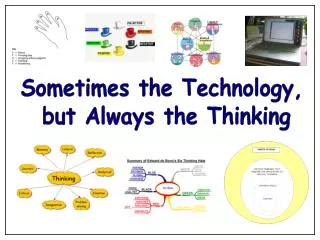
This document outlines the implementation of Thinking Maps in K-4 education for the 2009-2010 academic year, focusing on Circle Maps, Bubble Maps, Brace Maps, and Tree Maps. It details various thought processes such as defining, comparing, and classifying through engaging activities. Students explore concepts like character analysis in literature, similarities and differences in weather systems, and parts of a whole in various subjects, all while employing key vocabulary and context clues. The use of these visual organizers enhances critical thinking and learning engagement.

E N D
AJS- Our students-“Thinking” in action! 2009-2010 Implementation of Thinking Maps Organizers for Learning (K-4)
Circle Maps • Thought Process: Defining in Context/ Brainstorming • Key Words: • Context/ Context Clues • Brainstorm • List/ Define/ Tell • Explore the meaning • Discuss
Bubble maps • Thought Process: Describing • Key Words: • Observe using senses • Describe • Characteristics of • Attributes/ Properties/ Qualities of • Adjectives
Double Bubble Map • Thought Process: Comparing and Contrasting (similar to Venn) • Key Words: • Compare/ Contrast • Discuss similarities/ differences • Distinguish between/ differentiate
Bridge map • Thought Process: Seeing analogies • Key Words: • Identify common relationship • Interpret symbols • Guess the rule • Allegory • Simile/ Metaphor
Brace Maps • Thinking Process: Part- Whole • Key Words: • Parts of • Takes apart • Show structure/ physical components • Anatomy
Tree maps • Thinking Process: classifying • Key Words: • Classify/ Sort/ Group • Categorize • Type of/ Kinds of • Taxonomy • List and Elaborate