Understanding Vocabulary and Literary Terms in "The Contender" by Robert Lipsyte
310 likes | 425 Vues
This comprehensive guide explores essential vocabulary and literary terms found in Robert Lipsyte's novel "The Contender." Key terms such as "contend," "ghetto," and "jab" are defined to enhance understanding of the text's themes and conflicts. Additionally, literary elements like plot, setting, and irony are explained, providing insight into the narrative structure. This resource is invaluable for students and readers looking to deepen their appreciation of the novel's character struggles and overarching messages.


Understanding Vocabulary and Literary Terms in "The Contender" by Robert Lipsyte
E N D
Presentation Transcript
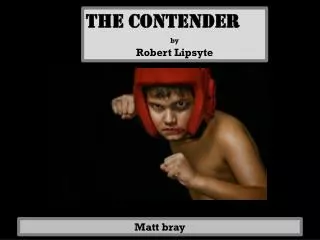
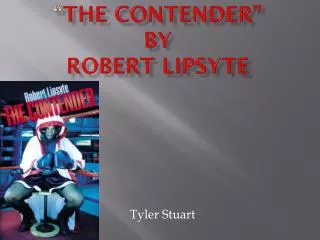
The Contenderby Robert Lipsyte Vocabulary and Literary Terms
contend • To strive against difficulty; struggle
contender • One who competes
ghetto • A section of a city occupied by a minority group who live there especially because of social, economic, or legal pressure.
marquee • A rooflike structure, often with a signboard, projecting over an entrance
spar • To fight with an opponent in a short bout or practice session, as in boxing.
sheepish • Embarrassed because you did something wrong
linoleum • a floor covering • Originally a • trademark
wino • A poor alcoholic with no home
Boardwalk • A walkway, especially of planks, along a beach or waterfront.
jab • To punch (someone) with short punches
catcall • A harsh word, phrase, or whistle expressing disapproval or making fun of someone.
knead • To squeeze, press, or roll with the hands, as in massaging
whimper • To cry or sob with soft sounds; whine • To complain
canvas • The floor of a ring in which boxing or wrestling takes place
clinch • To hold a boxing opponent's body with one or both arms to keep him/her from punching
probation • A period in which a person's fitness, as for membership in a social group, is tested
narcotic • An addictive drug, such as heroin, that reduces pain, alters mood and behavior, and brings on sleep
addict • One who is addicted, as to narcotics
emblem • An object or a representation that functions as a symbol
unanimous • complete agreement
shallow • Lacking depth of intellect, emotion, or knowledge
Plot • Sequence of events
Setting • Time and place of a novel
Irony • The outcome is not what is expected
Narrator • Person telling the story
Conflict • Struggle between opposing forces in a novel • Conflict can be between two people or a character can be in conflict with him/herself.
Foreshadowing • The author’s use of hints to show the reader what events will follow
Theme • Main idea; central message in a novel