Understanding Protein Functions and Their Role in Disease Pathways
This study explores the intricate regulation of biological processes through protein interactions and mutations. By analyzing input and output reactions, we delve into how changes in protein expression impact diseases, with a focus on amyloid fibrils and the effects of infections and mutations. The research creates a structured representation of approximately 160 canonical pathways, showcasing disease processes such as HIV, influenza, and glioblastoma-related protein alterations. Collaboration with prominent institutions underscores the significance of this work in understanding cellular functions and disease mechanisms.

Understanding Protein Functions and Their Role in Disease Pathways
E N D
Presentation Transcript
Data model in a nutshell Regulation (GO biol process) Input 1 Output 1 protein (UniProt) or mmolecule (ChEBI) or complex (GO/PRO) Reaction Input 2 Output 2 CatalystActivity (GO mol function) location (GO cell component) Pathway (GO biol process) Pathway Reaction Reaction
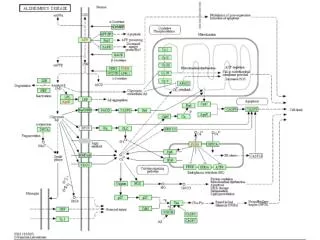
Divide reaction space into ~160 “canonical pathways”, each represented by an SBGN-like diagram
Interactors – small molecules; links to external data sources
Representing disease processes • The amount of a normal protein is changed (expression overlays). • An infection introduces new proteins into the body (HIV, flu, TB, and “Microme”). • A mutation (somatic or germline) changes the function of a protein.
A somatic mutation changes the function of a protein: IDH1 in many glioblastomas usually
Credits Ontario Institutefor Cancer Research Lincoln Stein Robin Haw Marija Orlicic Karen Rothfels Joel Weiser Guanming Wu Michael Caudy Bruce May European Bioinformatics Institute Henning Hermjakob Bijay Jassal Steve Jupe Phani Garapati Mark Williams David Croft Antonio Fabregat-Mundo Ewan Birney NYU Langone Medical Center Peter D'Eustachio Lisa Matthews Marc Gillespie Veronica Shamovsky Ralf Stephan EU 6th Framework Programme grant LSHG-CT-2005-518254 NHGRI Grant # P41 HG003751