Download
1 / 9
90 likes | 207 Vues
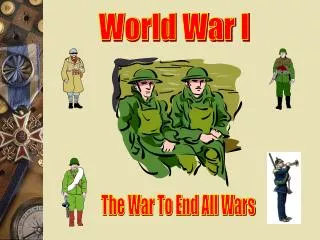
This analysis explores the aftermath of World War I, focusing on President Woodrow Wilson's plans for peace, including his famous Fourteen Points. Wilson advocated for "Peace Without Victory" and emphasized self-determination, allowing nations to shape their futures based on ethnicity and nationality. Key elements included freedom of the seas, trade barriers reduction, and military force cuts, culminating in the formation of the League of Nations. The dynamics between the powerful leaders known as "The Big Four" at the Versailles Peace Conference, particularly Wilson and Clemenceau’s opposing views, are also examined.

E N D
“The War to End All Wars” The Aftermath of World War I
Wilson’s Plans • “Peace Without Victory” • 14 Points • Self Determination: Ability of people to determine their own future (based on nationality, ethnicity, religion, race, etc.) • Would apply to many European nations and colonies
More 14 Points • Freedom of the Seas • Reduce barriers to trade • Designed to help U.S. economy • Reduction of military forces • League of Nations • Most important for Wilson
The Big Four • Wilson (USA) • David Lloyd George (Britain) • Wanted Germany’s colonies and navy ships • Vittorio Orlando (Italy) • Wanted land from Germany and A-H • Georges Clemenceau (France) • Wanted to break Germany apart, tear it up, burn it, shred it, chop it in to tiny pieces, burn it again, and feed what was left to a school of ill-tempered piranah.
Clemenceau was actually known as “The Tiger” They look nothing alike, which is why he was called “The Tiger”, not “The Piranah”. Clemenceau Ill-tempered Piranah
Where they met • Hall of Mirrors, Palace of Versailles