Understanding Mutated Genes and Their Protein Products in AP Biology
This chapter delves into gene mutations, which involve changes in DNA sequences that can significantly impact protein synthesis. It explores common mutations, including spontaneous mutations like the one causing sickle cell anemia, characterized by a single base pair substitution. The chapter discusses frameshift mutations resulting from insertions or deletions and the role of transposable elements in gene regulation. Additionally, it covers the origins of mutations, highlighting the effects of DNA replication errors and mutagens such as radiation and chemicals. It emphasizes the evolutionary implications of mutations passed through gametes.

Understanding Mutated Genes and Their Protein Products in AP Biology
E N D
Presentation Transcript
Chapter 14.5 Mutated Genes and Their Protein Products AP Biology Fall 2010
Mutation • A gene mutation is a change in one or several bases in the nucleotide sequence of DNA • Alters the message encoded in mRNA, which can result in a change in the proteins synthesized
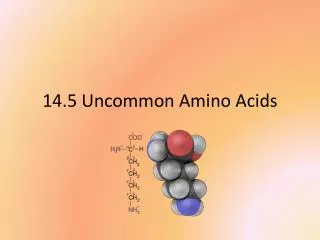
Common Gene Mutations • Spontaneous can cause sickle cell anemia • Result of a single “base pair substitution” • Places valine as the 6th amino acid in the hemoglobin chain instead of glutamate • Insertions and deletions
Common Gene Mutations • In a “frameshift mutation” there may be an insertion or deletion of several base pairs • Causing a misreading of the mRNA during translation
Common Gene Mutations • A rather dramatic mutation is that of transposable elements • Are regions of DNA that “jump” to new locations of DNA
Common Gene Mutations • Transposons land in genes and alter the timing, duration, or lock the genes activity together
How Do Mutations Arise? • Mutations occur spontaneously while DNA is being replicated, but fortunately special enzymes correct most of the mistakes • DNA polymerase and DNA ligasemay bypass or assemble a strand over the error
How Do Mutations Arise? • Mutations can also be caused by mutagens • Such as ionizing radiation (gamma and X-rays), ultraviolet radiation, and chemicals such as alkylating agents, which act as carcinogens
How Do Mutations Arise? • Nonionizing radiation changes base pairing properties by pairing thymine and to thymine, producing dimmers • Alkylating agents can transfer charged methyl or ethyl goups to reactive sites on DNA • Predisposing DNA to base pairing mistakes and mutations
The Proof Is in the Protein • If a mutation arises in a somatic cell, it will affect only the owner of that cell and will not be passed on to offspring • If, however, the mutation arises in a gamete, it may be passed on and thus enters the evolutionary arena • Either kind of mutation may prove to be harmful, beneficial, or neutral in its effects EWWWW!