WLFW Gopher Tortoise Update
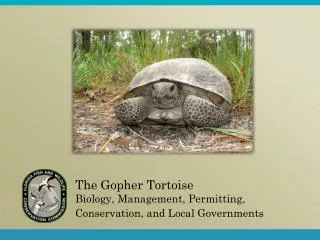
The U.S. Department of Agriculture's Working Lands for Wildlife (WLFW) program focuses on preserving the Gopher Tortoise and seven other species through collaborative partnerships. The conservation framework emphasizes the compatibility of species needs with agricultural practices, allowing private landowners to contribute effectively. The program provides assurance through the Endangered Species Act and offers tools for habitat improvements that benefit multiple species. Stakeholders are encouraged to participate in the implementation and evaluation of the strategic plan for habitat recovery and conservation partnerships.

WLFW Gopher Tortoise Update
E N D
Presentation Transcript
Galon Hall NRCS Working Lands for Wildlife Coordinator 202-690-1588 galon.hall@wdc.usda.gov WLFW Gopher Tortoise Update
Working Lands for Wildlife • Eight species identified through a collaborative process with partners • Selection criteria: • Conservation on private land can influence species’ outcomes • Species’ needs are compatible with agricultural practices and rural land management • Viable core habitat areas can be protected and habitat recovery opportunities exist • Partnership opportunities exist • Endangered Species Act tools are in place to provide regulatory certainty • Habitat improvements benefit other species
WLFW Partnership Update • Strategic Plan • priority species framework • secondary species adoption guidelines • Implementation Plan • Evaluation process/opportunities for input • Predictability delivery mechanism
ESA Predictability • Tied to the conservation plan • Applies to CTA once practice is implemented • Letters (USFWS and NRCS) • FAQ’s • Conservation plan • Voluntary self-verification process
Evaluation of Initiatives: Internal Review • assess the status and performance • collect lessons learned • develop recommendations for WLFW • develop recommendations for the enhancement of the initiative concept • Focus Group
More than 77 Years of Helping People Help the Land Questions?