Beethoven: The Prodigy Who Redefined Music and Bridged Classical and Romantic Eras
70 likes | 182 Vues
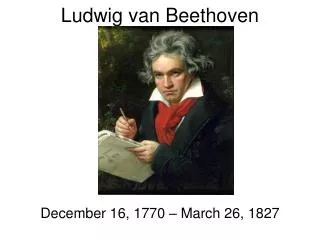
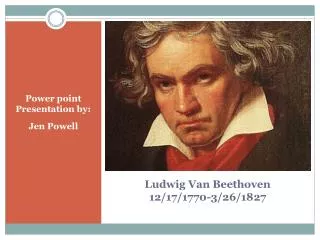
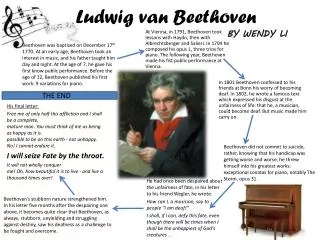
Ludwig van Beethoven (1770-1827) was a child prodigy and a transformative figure in music history. Despite a tumultuous upbringing and personal struggles, he became a renowned composer. His innovation with the pianoforte, allowing for dynamic expression, was groundbreaking. Beethoven is celebrated for his 9 symphonies and numerous piano concertos and sonatas, with iconic works like "Für Elise" and "Moonlight Sonata." His later years were marked by deafness, yet his powerful compositions, including the pioneering "Ode to Joy," showcased his resilience and emotional depth.


Beethoven: The Prodigy Who Redefined Music and Bridged Classical and Romantic Eras
E N D
Presentation Transcript
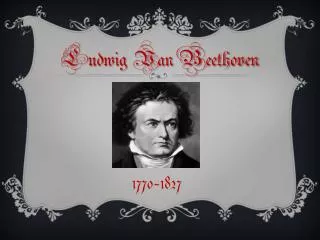
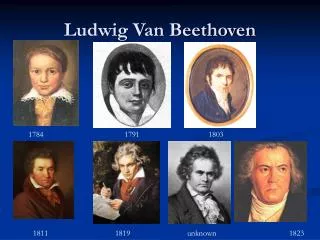
Ludwig Beethoven1770-1827 The Bridge between Classical and Romantic
-also grew up child prodigy -beaten into becoming a famous musician -grew up an emotional wreck
The invention of the pianoforte -the invention of the pianoforte begins to move in on the harpsichord and organ. -allowed notes to be played quietly and loudly -also allowed notes to be sustained for longer
His Body of Work 9 Symphonies Dozens of piano concertos and sonatas Fur Elise and Moonlight Sonata being his most famous Begins to break rules
His last years Went deaf gradually while finishing the 9th Symphony Makes him even grouchier and even more volatile Includes voices in the Symphony Rules of Classical period can’t contain “Ode to Joy”
Relax and Enjoy the 4th movement of Beethoven’s 9th Symphony, “Ode to Joy”