Download
1 / 16
160 likes | 243 Vues
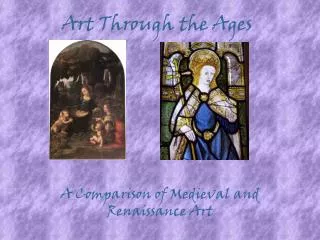
Explore the distinct characteristics of classical, medieval, and Renaissance art to understand how each period represents figures, emotions, and scenes. Discover how classical art idealizes figures and focuses on heroic themes, while medieval art emphasizes religion with stiff, flat figures. The Renaissance combines idealized figures with natural detail, adding depth and perspective to paintings. Uncover the evolution of artistry through history and how these styles continue to influence contemporary art.

E N D
Rediscovering the Classical Tradition Through Art T.C.I. 7.5.1.3
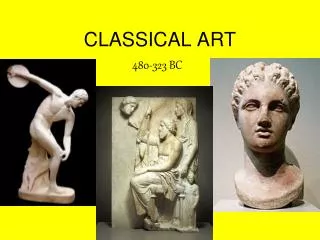
Characteristics of Classical Art • Figures look idealized, perfect • Bodies look active, move convincingly • Bodies are often nude, sometimes draped in togas • Faces are bland and calm, without emotion • Scenes show heroic figures or real people doing real tasks of daily life • Little background or sense of perspective
Characteristics of Medieval Art • Subjects are mostly religious • Figures look flat and stiff with little real movement • Important figures are large • Fully clothed, draped in deeply carved, stiff-looking clothes • Faces are solemn, with little emotion • Paintings use vibrant colors • Flat, two-dimensional painted figures • Backgrounds a single color, often gold, no interest in creating realistic space
Characteristics of Renaissance Art • Both religious and nonreligious scenes • Figures look idealized, perfect • Bodies may look active, moving • Bodies may be nude or clothed • Real people doing real tasks of daily life • Faces express what people are thinking • Colors respond to the light that falls on them • Interest in nature, lots of natural detail • Full, deep backgrounds with perspective • Paintings are symmetrical