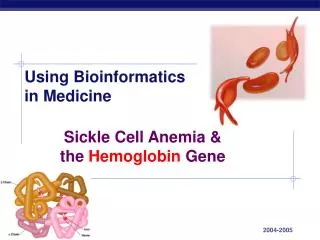
Using Bioinformatics in Medicine
390 likes | 507 Vues
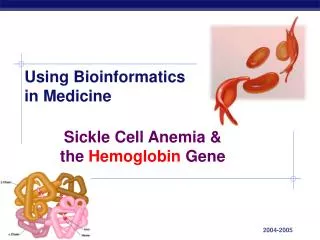
Sickle Cell Anemia is the most common genetic disorder in the U.S., particularly affecting African Americans. Characterized by the mutation of the hemoglobin gene, this condition causes significant health challenges, including painful crises, anemia, and increased susceptibility to infections. Understanding the genetic basis through bioinformatics can facilitate earlier diagnosis and better management strategies. This project explores the development of a simple DNA test for the sickle cell allele, enhancing public health initiatives and genetic counseling efforts.


Using Bioinformatics in Medicine
E N D
Presentation Transcript
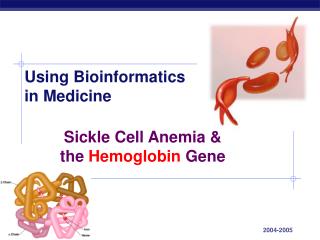
Using Bioinformatics in Medicine Sickle Cell Anemia & the Hemoglobin Gene
Sickle Cell Anemia • Most common genetic disease in US • high incidence in African-Americans • affects red blood cells • potentially lethal
Symptoms • Anemia • jaundice, fatigue, paleness, shortness of breath • Hypoxia (low oxygen) & capillary damage • severe pain in organs & joints • retinal damage (blindness) • Delayed growth • delayed puberty, stunted growth • Infections • more susceptible • depressed immune • death from bacterial infections • Stroke • blocked small blood vessels in brain • primarily in children
Sickle cell hemoglobin mutant hemoglobin (Hb S)
Cell biology • Hb S molecules stick together • form fibers • under low blood oxygen levels • distortion of cells from normal round to sickle shape
HbAA Hb A Hb S Hb A HbAS HbAS HbSS Hb S Genetics • Sickle cell mutation • Hb S • changes 6th amino acid of hemoglobin chain • normal glutamic acid valine • Recessive allele • heterozygote • Hb AS, normal, but carrier • homozygote recessive • Hb SS, sickle cell disease • 2 sickle cell carriers mate… • each child has 1/4 chance of having the disease
Prevalence in U.S. • Carriers • ~2 million Americans carry sickle cell trait • 1 in 14 African-Americans • Disease • ~72,000 Americans have disease • ~1 in every 700 African-American babies born in U.S. has sickle cell disease
The Malaria Connection • Sickle cell disease is surprisingly common for a potentially lethal genetic disease • Heterozygote advantage • heterozygotes are tolerant of malaria infection & do not suffer symptoms of sickle cell disease
Prevalence of Malaria Prevalence of SickleCell Anemia ~sickle cell movie~
Public health • Many carriers of this mutant allele are not aware that they have it • at risk of having children with the disease • DNA test for sickle cell allele would benefit public health • genetic counseling • pre-natal testing
Your Assignment • Develop a simple inexpensive DNA test for sickle cell allele • develop DNA probe • test for presence of sickle cell mutation • use bioinformatics tools • online databases of DNA sequences • UCSC Genome Browser • probe design tool • Primer3
DNA review • DNA double helix • A–T, C–G • base pair bonds can be broken by heating to 100°C • separate strands • denature, or melt
DNA probes • Probe • short, single stranded DNA molecule • mix with denatured DNA • DNA Hybridization • probe bonds to complementary DNA sequence • Label • probe is labeled for easy detection labeled probe G A T C A G T A G genomic DNA C T A G T C A T C 5’ 3’
G A T C C G T A G Designing Probes • Allele specific probes • probes require matched sequences • can detect single base differences in alleles • single mis-matched base near middle of probe greatly reduces hybridization efficiency labeled probe genomic DNA X C T A G T C A T C 5’ 3’
Dot blot • Genomic DNA • denature DNA • bind DNA from cells on filter paper • DNA hybridization • wash probe over filter paper • if complementary sequence present, probe binds to genomic DNA • expose on X-ray film • dark spots show bound probe
Get hemoglobin sequence • UCSC Genome Browser • human genome database • http://genome.ucsc.edu/ • UCSC Genome Browser home page • click on link to Genome Browser • in genome pulldown menu, choose “Human” • for position text box, type “HBB” (hemoglobin ) • hit “submit”
Genome Browser Results • Listing of genes & sequences in database • Click on “RefSeq” gene for HBB (NM_000518)
Chromosome view • Position of HBB in genome • at base 5.2 million on chromosome 11
Change view of chromosome • Move & zoom tools • zoom out ~30x to see more of chromosome 11
More Hb genes • Cluster of hemoglobin genes on chromosome 11 • HBD, HBG1, HBG2 & HBE1 • what are these genes?
Get the DNA sequence • Click on the HBB RefSeq gene • HBB RefSeq summary page
HBB RefSeq gene summary page • Click on “Genomic Sequence from assembly”
Formatting the sequence • Sequence Formatting Options • “exons in upper case, everything else in lower case” • hit “submit” • Genomic DNA • lower case = introns • spliced out of mRNA before translation • upper case = exons • translated into polypeptide chain
HBB DNA sequence >hg16_refGene_NM_000518 range=chr11:5211005-5212610 5'pad=0 3'pad=0 revComp=TRUE ACATTTGCTTCTGACACAACTGTGTTCACTAGCAACCTCAAACAGACACC ATGGTGCATCTGACTCCTGAGGAGAAGTCTGCCGTTACTGCCCTGTGGGG CAAGGTGAACGTGGATGAAGTTGGTGGTGAGGCCCTGGGCAGgttggtat caaggttacaagacaggtttaaggagaccaatagaaactgggcatgtgga gacagagaagactcttgggtttctgataggcactgactctctctgcctat tggtctattttcccacccttagGCTGCTGGTGGTCTACCCTTGGACCCAG AGGTTCTTTGAGTCCTTTGGGGATCTGTCCACTCCTGATGCTGTTATGGG CAACCCTAAGGTGAAGGCTCATGGCAAGAAAGTGCTCGGTGCCTTTAGTG ATGGCCTGGCTCACCTGGACAACCTCAAGGGCACCTTTGCCACACTGAGT GAGCTGCACTGTGACAAGCTGCACGTGGATCCTGAGAACTTCAGGgtgag tctatgggacgcttgatgttttctttccccttcttttctatggttaagtt catgtcataggaaggggataagtaacagggtacagtttagaatgggaaac agacgaatgattgcatcagtgtggaagtctcaggatcgttttagtttctt ttatttgctgttcataacaattgttttcttttgtttaattcttgctttct ttttttttcttctccgcaatttttactattatacttaatgccttaacatt gtgtataacaaaaggaaatatctctgagatacattaagtaacttaaaaaa aaactttacacagtctgcctagtacattactatttggaatatatgtgtgc ttatttgcatattcataatctccctactttattttcttttatttttaatt gatacataatcattatacatatttatgggttaaagtgtaatgttttaata tgtgtacacatattgaccaaatcagggtaattttgcatttgtaattttaa aaaatgctttcttcttttaatatacttttttgtttatcttatttctaata ctttccctaatctctttctttcagggcaataatgatacaatgtatcatgc ctctttgcaccattctaaagaataacagtgataatttctgggttaaggca atagcaatatctctgcatataaatatttctgcatataaattgtaactgat • first 50 bases are untranslated “leader” sequence • actual protein coding sequence starts at base 51 • starting with letters ATG
Get the mutant sequence • Sickle cell mutation • single base mutation • 6th amino acid: glutamic acid valine • need DNA sequence to design probe • SNPs • single nucleotide polymorphisms • “variations and repeats” section: pack
SNPs of HBB gene • several SNPs of HBB gene • need mutation in exon • near beginning of HBB protein • rs334 = Hb S mutation
rs334 Hb S sickle cell mutation • “Sequence in Assembly” = normal sequence • “Alternate Sequence” = sickle cell sequence
Align Hb A & Hb S sequences • Line up sequences • sequence fragment is enough to design DNA probes for normal & mutant sequences Normal: catggtgcacctgactcctgAggagaagtctgccgttactg HBB: ATGGTGCATCTGACTCCTGAGGAGAAGTCTGCCGTTACTGCCCTGTGGGG Mutant:catggtgcacctgactcctgTggagaagtctgccgttactg
Designing the probe • Primer3 • free on Web from MIT http://frodo.wi.mit.edu/cgi-bin/primer3/primer3_www.cgi • powerful tool for primer design • paste in sequence fragment
Allele specific probes • Need 2 probes • normal allele probe • sickle cell allele probe • choose hybridization probes • Customize probes • 12-16 bases • 40°-60°C longer probes are stable at higher temperatures
Your probes… • Ready to order! • Place an order at your local DNA lab!
Extra credit Advanced Assignments
Advanced Assignment #1 • Use the Web to research other “allele specific” genotyping methods • ligase chain reaction • primer extension • TaqMan • Design probes for one of these alternate technologies
Advanced Assignment #2 • PCR & Restriction Digest • pre-natal testing • for small samples it is necessary to use PCR to amplify the amount of genomic DNA before testing • once you have a PCR-amplified DNA fragment of a gene, a restriction enzyme may be able to distinguish between alleles • design PCR primers & find restriction enzyme that will locate sickle cell allele • design with Primer3
Restriction enzymes • NEBcutter • http://tools.neb.com/NEBcutter2 • New England BioLabs • screens DNA sequence against all restriction enzymes • Webcutter • similar program • http://www.firstmarket.com/cutter/cut2.html
Advanced Assignment #3 • Population genetics • determine if sickle cell allele is in Hardy-Weinberg equilibrium in the U.S. African-American population • ~2 million Americans carry sickle cell trait • 1 in 14 African-Americans is a carrier • ~1 in every 700 African-American babies born in U.S. has sickle cell disease