Download
1 / 12
120 likes | 226 Vues
This study explores the significant parallels in dissent against centralization during the Civil War, particularly focusing on events such as the 1863 New York City Draft Riot and the Richmond Bread Riot. It examines the impact of conscription, martial law, and changing war aims on public sentiment. Key figures like Clement Vallandigham emerge as symbols of opposition. The text also highlights instances of violence and resistance, including attacks on the Colored Orphans Asylum and the Great Hanging in Gainesville, Texas, showcasing the complexities of wartime dissent.

E N D
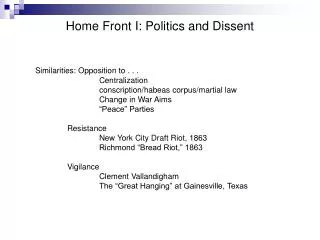
Home Front I: Politics and Dissent Similarities: Opposition to . . . Centralization conscription/habeas corpus/martial law Change in War Aims “Peace” Parties Resistance New York City Draft Riot, 1863 Richmond “Bread Riot,” 1863 Vigilance Clement Vallandigham The “Great Hanging” at Gainesville, Texas