Ephedra
Ephedra, an evergreen shrub native to Central Asia, contains active alkaloids like ephedrine and pseudoephedrine. Historically used in traditional Chinese medicine (TCM) for over 5000 years, it treats conditions such as asthma, flu, and nasal congestion. Since the late 19th century, research revealed its pharmacological properties, leading to widespread use as a decongestant and stimulant, although it was associated with serious adverse effects like high blood pressure and heart rate. Understanding these complexities is crucial for safe use.

Ephedra
E N D
Presentation Transcript
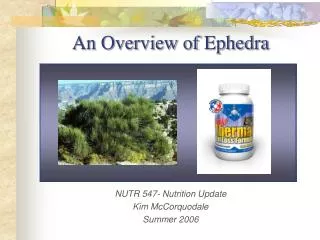
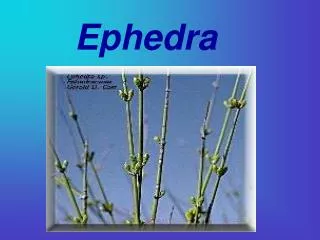
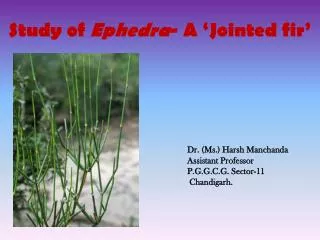
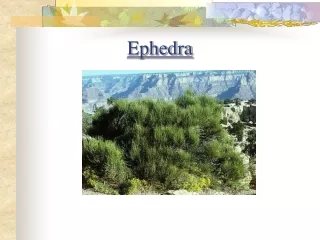
Ephedra • An evergreen shrub native to central Asia • Predominant active alkaloid- ephedrine • Other active alkaloids include: pseudoephedrine norephedrine norpseudoephedrine
Traditional Uses of Ephedra (ma huang) • Tea prepared from dried, comminuted branches • Used for ~5000 yrs. by practitioners of traditional Chinese medicine (TCM) to treat asthma, flu, and nasal congestion • Combined with other herbs to enhance or decrease effects
History of Conventional Uses of Ephedra • 1887- Ephedrine first isolated by Japanese chemist, N. Nagai • 1920’s- Series of studies on ephedrine’s pharmacological properties leads to synthetic production • 1927- Widely used as a nasal decongestant, central nervous system stimulant, and to treat bronchial asthma • 1950’s- Many reports of side effects such as blood pressure and heart rate lead pharmaceutical companies to switch to pseudoephedrine
Physiological Effects • Strong stimulant- enhances the release of norepinephrine (NE) from sympathetic nerve endings (see handout) • Has 1 and 2 agonist activityrelaxes bronchial muscles • Has 1, 2, 1, and 2 adrenergic activityleads to less desirable effects such as blood pressure, heart rate, and nervousness • To compensate, the body releases adenosine and prostaglandin (PG) which inhibit the release of NE
Physiological Effects • Caffeine and aspirin may inhibit and/or reduce the effects of adenosine and PG continued NE activation • “ECA” stack • ephedrine alkaloids (ma huang) • caffeine (Gaurana, Bissey Nut, Kola) • aspirin/salicin (Willow Bark extract)
Reported Benefits • Increased weight loss due to thermogenic effect • Enhanced athletic performance • Increased energy • 3 billion servings sold during 1999 12 million people using ephedra
Adverse Effects • Dizziness, tremors, irregular heart rate myocardial infarctions, strokes • May induce psychological dependence • 1993-2003- FDA documented 2,277 adverse event reports (AER) concerning cardiovascular, neurological and psychiatric effects (~1% of total?) • Type ‘A’ AE- directly related to the pharmacological actions of the active ingredient • Type ‘B’ AE- rare and difficult to separate from pre-existing conditions; cause/effect hard to prove