Strategic Behavior Interventions: Day Two Agenda for Inclusion and Secondary Support Systems
Join us for Day Two of our program focusing on inclusion and secondary interventions in education. This agenda reviews key concepts such as understanding behavior, implementing brief Functional Behavioral Assessments (FBAs), and utilizing Behavior Intervention Plans (BIPs) effectively in schools. Participants will collaborate on strategic planning for interventions based on data-driven approaches, and engage in discussions about positive behavior supports and response to intervention (RtI) models. Enhance your skills in addressing behavioral challenges to support student success.

Strategic Behavior Interventions: Day Two Agenda for Inclusion and Secondary Support Systems
E N D
Presentation Transcript
Tier 2/Secondary Interventions Rachel Saladis Kim Miller Kathy Halley
Agenda -- Day Two • Inclusion • Review of Secondary Systems • Understanding Behavior • Understanding and Using Brief FBA/BIP • Planning to use Brief FBA in school
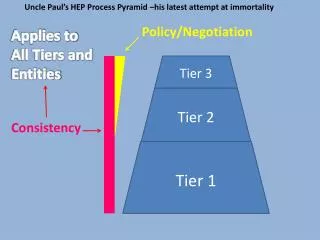
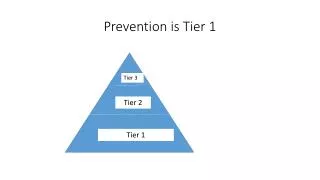
Positive Behavior Interventions & Supports:A Response to Intervention (RtI) Model Tier 1/Universal School-Wide Assessment School-Wide Prevention Systems ODRs, Attendance, Tardies, Grades, etc. Tier 2/Secondary Tier 3/ Tertiary Check-in/ Check-out (CICO) Intervention Assessment Social/Academic Behavioral groups Daily Progress Report (DPR)(Behavior and Academic Goals) Group Intervention with Individualized Feature Competing Behavior Pathway, Functional Assessment Interview, Scatter Plots, etc. Brief Functional Behavior Assessment/ Behavior Intervention Planning (FBA/BIP) Complex or Multiple-domain FBA/BIP SIMEO Tools: HSC-T, RD-T, EI-T Wraparound Illinois PBIS Network, Revised October 2009 Adapted from T. Scott, 2004
Tier 2/Tier 3 (Secondary/Tertiary) Interventions Tracking Tool School Name: __________________________________ School Total Pop:________
3-Tiered System of Support Necessary Conversations (Teams) UniversalTeam Secondary Systems Team Problem Solving Team Tertiary Systems Team Uses System data; determines overall intervention effectiveness Uses System data; determines overall intervention effectiveness, manages student assignment to interventions Plans SW & Class-wide supports based on data Standing team (SSIT); uses FBA/BIP process for one youth at a time CICO Universal Support Brief FBA/BIP Groups Complex FBA/BIP WRAP Group w. individual feature Brief FBA/BIP Sept. 1, 2009
Brief FBA/BIP Behavior Pathway Behavior Support Plan
Decision Rules • How do we decide whether a student is appropriate for a Brief FBA? • First try a CI/CO. WHY? share • CI/CO with individual features • Instructional group possibilities. • Don’t attempt Brief FBA if the student has multiple behavioral problems across multiple settings. This probably merits a complex FBA.
Process for Brief FBA • Student is identified and referred to the SSIT. This team assigns a Brief FBA facilitator. • Facilitator collects data and completes the Brief FBA. (This is you!) • Facilitator shares Brief FBA and completes the Behavior Intervention Program with Team. • A follow-up is scheduled to review progress and make decisions.
Behavior Pathway Definitions • Problem Behavior • What is the behavior of concern? • Describe it in measurable, concrete, observable language. • Role Play Practice
Data Collecting Tools • Teacher Interview Tools • Ratings • Observation Tools
Behavior Pathway--Antecedents • When does the behavior happen? • What happens immediately before the behavior occurs? • Under what conditions is the student most successful (fewest instances of behavior)? • Under what conditions is the student least successful (most instances of behavior)? • Role Play Practice
Behavior Pathway-Setting Events • What factors, more distant in time/space, affect the likelihood of the behavior occurring? • Medical or psychological conditions • Family factors • Environmental factors • Student conditions, abilities, traits • Interpersonal factors Role Play Practice
Behavior Pathway--Consequences • Maintaining Consequence • What have been responses to the behavior? • What are observable result of the responses? • What have been the unintended results or consequences? Role Play Practice
Behavior Pathway--Function • What does the student get? • What does the student avoid? • Interaction, attention • Psychological needs (status, power, control, belonging, rejection, embarrassment) • Sensory stimuli • Assistance • Activity • Tangible object
Functions Pos Reinf Neg Reinf
Giv Function of Behavior
BEHAVIOR PATHWAY Desired Behavior Working quietly & raising hand for help 6 Setting Events Has reading struggles. Few friends. Financial stresses at home. 3 Antecedent Quiet, independent seatwork. Usually reading or writing. 2 Consequence Students laugh. Teacher reprimands. Teacher send to Office. 4 Function To GET: Peer attention Peer acceptance To AVOID: Reading and writing 5 Problem Behavior Makes noises in the classroom. 1 Acceptable Behavior Being quiet but not working 7
Hypothesis • Summarize antecedent, behavior and consequence into a hypothesis. Box 2,1,3. • When: • The student does: • In order to: When doing independent seatwork, usually reading or writing, Russell makes noises to get peer attention and to avoid work by getting sent to the office.
BEHAVIOR PATHWAY Desired Behavior 6 Setting Events 3 Antecedent 2 Consequence 4 Function 5 Problem Behavior 1 Acceptable Behavior 7