The Defense of Slavery: Moral Justifications and Economic Arguments from 19th Century Clergy
This text discusses the perspectives of Reverend Benjamin Morgan Palmer and Rabbi Morris J. Raphall on slavery as a divine institution essential for Southern society. Palmer argues that slavery is a providential trust that supports both material interests and social order in the South. He portrays enslaved individuals as dependents requiring guardianship, insinuating that their freedom would lead to societal ruin. In contrast, Reverend Henry Ward Beecher decries slavery as a national sin, calling for recognition of human rights alongside moral accountability, emphasizing a need for respect and protection for all individuals.

The Defense of Slavery: Moral Justifications and Economic Arguments from 19th Century Clergy
E N D
Presentation Transcript
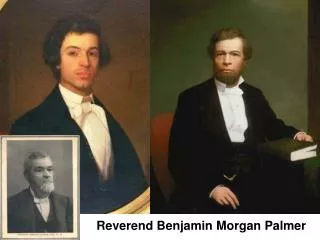
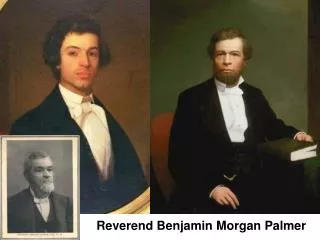
Reverend Benjamin Morgan Palmer • Slavery a Divine Trust: Duty of the South to Preserve and Perpetuate it • The South’s providential trust “is to conserve and to perpetuate the institution of slavery as now existing….” • The South needs slavery to support its material interests. • White slave owners act as guardians of their black slaves. Blacks are like helpless children who the slave owner protects. • “Freedom would be their doom.” • Slaves “form parts of our households, even as our children….” • The world should FEAR abolition. The world is more dependent on slavery for its wealth than ever, and if slavery ends, the world economy will totter. • The South defends the cause of God and religion, since the “Abolition spirit is undeniably atheistic….”
Rabbi Morris J. Raphall POINT 1: The Bible does not condemn slavery. However, it does condemn coveting another’s property, including another’s slaves. POINT 2: Abolitionists, such as Reverend Henry Ward Beecher, are inventing new sins when they claim that slavery is evil. By doing this they are insulting and exasperating “thousands of God-fearing, law-abiding citizens” and have pushed the country toward civil war.
Reverend Henry Ward Beecher POINT 1: “…The whole nation is guilty [regarding slavery]….” POINT 2: “Our civilization has not begotten humanity and respect for others’ rights, nor a spirit of protection to the weak….”