Download
1 / 9
90 likes | 217 Vues
This midterm presentation by Masaki Hosoda focuses on a project aimed at measuring the secondary mirror of the Large Synoptic Survey Telescope (LSST) using a Fizeau-type interferometer. It addresses issues related to gravity-induced bending of the test plate and explores the effectiveness of vacuum techniques in reducing this problem. The project includes hand calculations, simulations, and experimental setups to compare theoretical models with practical outcomes. Key steps involve surface deflection analysis caused by gravity and vacuum, and simulation of wavefront interactions in the LSST model.

E N D
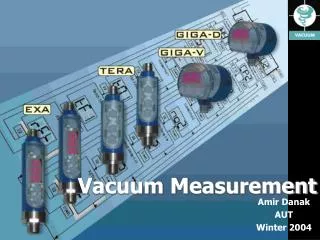
Vacuum support for LSST secondary measurement - Midterm presentation - Masaki Hosoda 4/8/2010 523L Individual Project
Contents • Background • Purpose • Plan for project • Experimental Setup
Background Prof. Dubin et al. tries to measure the Large Synoptic Survey Telescope (LSST) secondary mirror by Fizeau type interferometer with 5mm gap as shown in Figure [1]. In this case, the bending of the test plate caused by the gravity becomes a problem, since the test plate is flipped around after polishing the reference surface. Reducing an unexpected bending in the reference surface is significant. [1] M. B. Dubin, et al., “Fizeau interferometer with spherical reference and CGH correction for measuring large convex aspheres”, Proceedings of the SPIE, Volume 7426 (2009)
Purpose • The purpose of this individual project is to do a simple experiment showing correspondence between simulation and experiment.
Plan for project • Step 1. Hand calculation on LSST model (Done) • Check a surface deflection of Test Plate caused by gravity • Check a surface deflection of Test Plate caused by vacuum • Summarize an effectiveness of vacuum technique • Step 2. Simulation on a simple model • Design a simple model (100mm in diameter, 2.69mm in thickness) • List the Zernike terms depending on pressure [Pa] • Step 3. Experiment on a simple model • Set up the vacuum equipment, lenses, and sealing material • Measure the Zernike terms depending on pressure [Pa] • Show simulation works based on the comparison of simulation data with experimental data • Step 4. Simulation to LSST model (in 523 class) • Simulate wavefront caused by gravity (Solidworks -> Zemax) • Simulate wavefront caused by vacuum (Solidworks -> Zemax) • Show how much uncertainty caused by gravity can be reduced by using vacuum technique
Hand calculations • vacuum deflects the lens as the following. In this case, CD = 0.943 (Continuous support along diameter) by Vukobratovich page 261. Since Pressure (P) = Force / Area = ρgh, then, • About 1000 [Pa] (0.15 [psi]) is needed for a simple experiment.
Experimental Setup Flat Surfaces Needle Scale O-ring Leak Valve Vacuum Pump Reservoir Water Pressure Gage