Download
1 / 7
80 likes | 323 Vues
This text explores Reigeluth's Elaboration Theory, highlighting various instructional strategies that enhance learning. It focuses on different types of learning, including memorization, skill application, and understanding relationships. The theory emphasizes the control of learning, discussing both teacher-centered and student-centered approaches. It also covers the importance of interdisciplinary topics and problem domains, along with effective grouping strategies and interactions for enhanced learning. Finally, it addresses the different forms of support needed—cognitive and emotional—for successful learning environments.

E N D
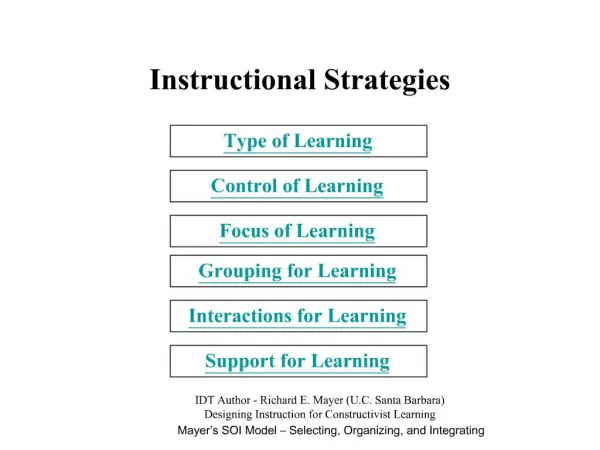
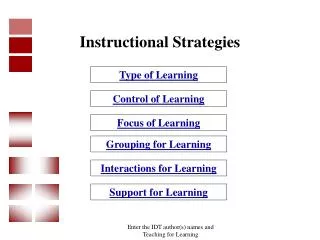
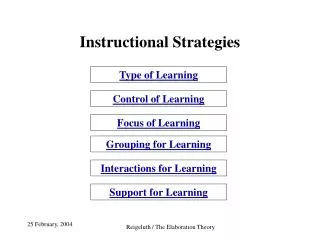
Instructional Strategies Type of Learning Control of Learning Focus of Learning Grouping for Learning Interactions for Learning Support for Learning Reigeluth / The Elaboration Theory
Memorize Information Apply Skills Understand Relationships Apply Generic Skills Type of Learning Reigeluth / The Elaboration Theory
Control of Learning Teacher Centered Student Reigeluth / The Elaboration Theory
Focus of Learning Interdisciplinary Topic Problem Domain Reigeluth / The Elaboration Theory
Grouping for Learning Individuals Pairs Teams (3-6) Groups (7+) Reigeluth / The Elaboration Theory
Interactions for Learning Human Nonhuman Student - Teacher Student- Student Student- tools Student information Student- environments /manipulative O t h e r O t h e r Reigeluth / The Elaboration Theory
Support for Learning Cognitive Support Emotional Support Reigeluth / The Elaboration Theory