100 likes | 232 Vues
This comprehensive exploration delves into various ancient weapons, including javelins, spears, bows, swords, and shields. Javelins were lightweight, ranging from 75 cm in length, designed for easy throwing yet easy to dodge. Spears featured winged designs for effective engagement in combat. Bows made of yew, elm, or ash proved reliable for hunting and battle. Swords, often heirlooms, were considered valuable. Shields, both wooden and metal, served as universal defense tools. Additionally, the characteristics and historical significance of each weapon are outlined.
E N D
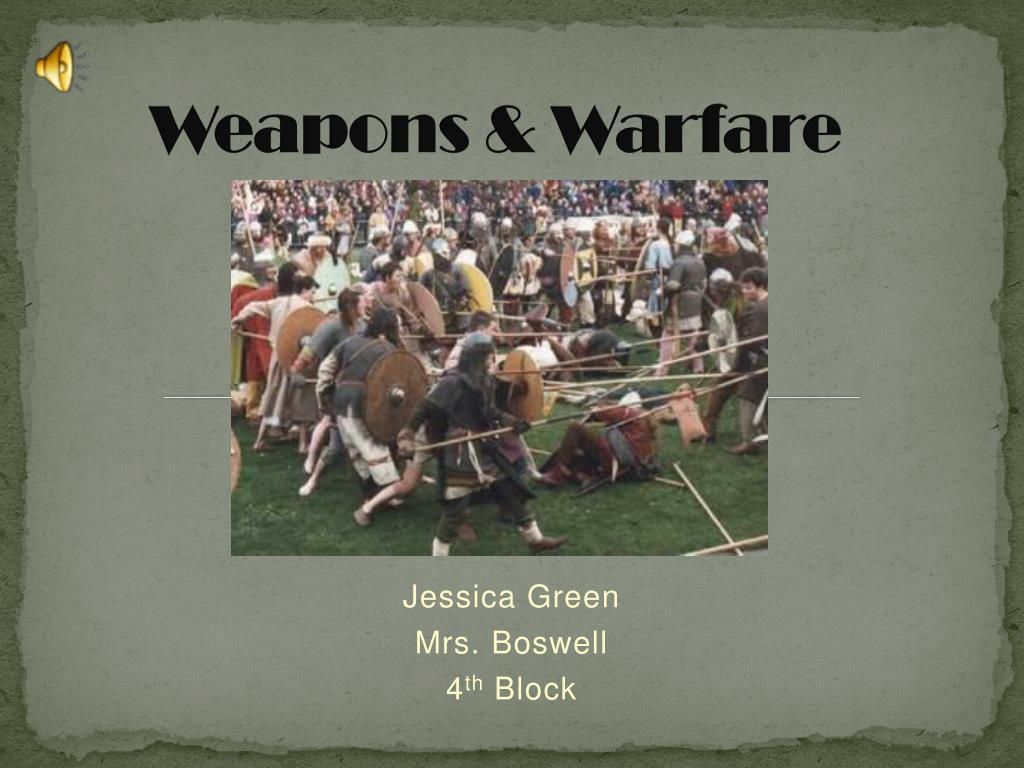
Weapons & Warfare Jessica Green Mrs. Boswell 4th Block
Javelins The Thrusting Spear Winged Spear • two projections on the side of the socket • projections used to catch and lock an opponent's spear or hook an opponents shield • light throwing spear • as long as 75cm • weighs a pound or two • barbed head • easy to catch • Traveled relatively slow • Easy to dodge • fairly broad leaf or lozenge shaped head • heads were attached by socket to a wooden shaft • length of about 1.5 - 2.7m (5' - 9') • 2.1m (7') most common length Spears
Seaxes • single edged knife • symbol of freemanship • used to finish off a felled opponent • easy weapon to make • 7.5 - 75cm (3" - 30") blade length
Bows And Arrows • displayed a certain disdain for it's use in battle • made of yew, elm or ash • between 1.65 - 1.9m (66" - 76") long • adequate to hunt animals • broad headed and made of Iron
Slings used primarily for hunting small game have little effect unless a lucky shot hit the face Ammunition was rounded stones upgraded by placing the essence of the sling at the end of a staff or shaft no known examples of such a tool
Swords • most prized and lauded weapon • valuable • were often handed down from generation to generation • 72 - 80cm (29" - 32") long
Helmets Limb Armour • Thick leather was possibly used to make helmets • Scolded leather to make it stiff and hard • Used to protect the head Far rarer than body or head armor Worn by the wealthy A sensible defense as the legs were unguarded
Shields used universally by all warriors have wooden or metal bands on the back to strengthen flat or 'watchglass' shaped in cross-section made of linden (Lime) wood varied in size from around 45 - 120cm smaller shield sizes come from the pagan period for the Saxons and the larger sizes from the 10th and 11th centuries
Axes A flat strip of 'soft' iron is folded in half around a mandrel to create the socket good in attack fairly poor as a tool to defend yourself quickly induces fear 60 - 90cm (2' - 3') long 7.5 - 150cm (3" - 6") blade width
Works Cited http://www.regia.org/warfare/spear.htm