The Crucible
"The Crucible" by Joey Trunkely explores the Salem witch trials, emphasizing how fear led individuals to lie and accuse others unjustly for self-preservation. Innocent lives were lost as communities were gripped by paranoia and the pressures of societal judgment. Modern parallels can be drawn, where fear manifests in terrorism, war, and social judgment. Just as in Salem, today's society sees individuals scapegoating others to escape accountability, illustrating a chilling continuity of human behavior across time.

The Crucible
E N D
Presentation Transcript
The Crucible By; Joey Trunkely
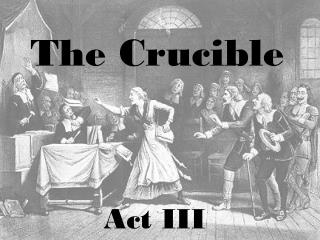
The Crucible • They thought there was witches in Salem. • People could either admit to being a witch or deny it and be killed. • Innocent people died.
Modern day • A lot of crazy people. • People lie to get ahead in life. • Many people die everyday.
Fear in the Crucible • No one wanted to die so many people lied about people being witches. • John Proctor didn’t want to leave his family. • The church was scared because they didn’t approve of weird behavior. • They town was brought together by trials of accused witches.
Fear in modern day • War with other countries • Terrorism • Being judged on your beliefs. • Getting into trouble with the law.
Similarities of fear in modern day and The Crucible • Brought together by fear of a common thing. • Don’t want to get in trouble with the law/church. • Being judged by your peers.
Scapegoats in The Crucible • They would accuse someone else of being a witch just so they wouldn’t die. • Abigail blamed Tituba for making them dance in the woods. • The Putnam's blame Rebecca nurse for the supernatural deaths of Ann's babies.
Scapegoats in modern day • Criminals will blame other people for their crime. • People blame the government for their problems. • People will blame anyone to not get in trouble