Download
1 / 17
170 likes | 298 Vues
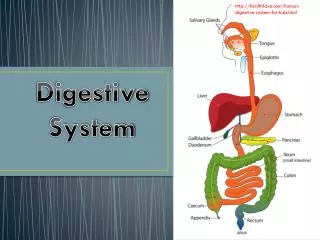
The liver is a vital accessory organ in the digestive system, performing around 200 metabolic reactions, including the removal of toxins and waste from the bloodstream. Hepatocytes, the liver cells, are structured in lobules where blood circulates through them. The gallbladder stores and concentrates bile from the liver, essential for emulsifying dietary fats. The pancreas contributes to digestion through exocrine secretions of enzymes and the neutralization of acidic chyme. Together, these organs play crucial roles in metabolic regulation and nutrient processing.

E N D
Digestive System II Liver, Gallbladder, Pancreas
Liver • Extremely important accessory organ of the digestive system • Main functions of the liver are: • Metabolic regulation • 200 metabolic reactions • All blood from the digestive system is processed by the liver • Liver removes toxins and waste products from the blood • Hematological regulation • Removal of old RBC’s • Synthesis and secretion of bile
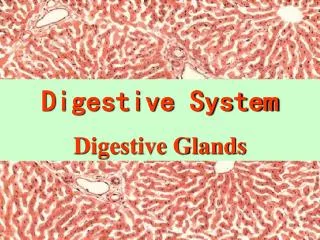
Liver cells • Liver cells are called HEPATOCYTES • In the liver, these cells are arranged in irregular plates called LOBULES • Blood circulates through and around these cells entering via branches of the portal vein and hepatic artery • Blood leaves the lobules via the central vein
Gallbladder • Located in a recess in the visceral surface of the right lobe of the liver • Stores and concentrates bile made in the liver • Function of bile is to emulsify fats in the diet so that the fat can be digested • Bile is secreted into the duodenum via the common bile duct
Transport of Bile • Bile is secreted into small channels in the liver called bile canaliculi • The canaliculi form larger bile ductules • The ductules form the right and left hepatic duct which fuse to form the common hepatic duct • The cystic duct joins with the common hepatic duct to form the common bile duct
Pancreatic Secretions • Bicarbonate – neutralizes acidic chyme • Amylase – continues carbohydrate digestion • Protease enzymes • Trypsin which activates • Chymotrypsin and Carboxypeptidase • Lipid enzymes • Colipase and Phospholipase
Histology of the Pancreas • Pancreas is composed of: • 1. Pancreatic acini cells • Exocrine cells • Secrete the pancreatic enzymes into the duodenum • 2. Islet cells • Endocrine cells • Secrete insulin