Download
1 / 20
200 likes | 324 Vues
This detailed overview covers the essential functions of blood, including oxygen and nutrient distribution, waste removal, hormone transport, and protection against infections. It discusses blood composition, highlighting plasma, red blood cells (RBCs), white blood cells (WBCs), and platelets. Key aspects include hematocrit levels, normal blood pH, and the formation and lifespan of different blood cells. The overview also touches on disorders such as anemia and hemophilia, immune responses, and blood typing, providing a holistic understanding of this vital fluid.

E N D
Blood • Functions • distribution • oxygen and nutrients • removal of CO2 & wastes • hormones • protection • prevent blood loss • prevent infection • regulation • body temp. blood’s temp. 100.4 degrees F • normal Ph 7.35-7.45 • volume • males ~ 5-6 L • females ~ 4-5 L
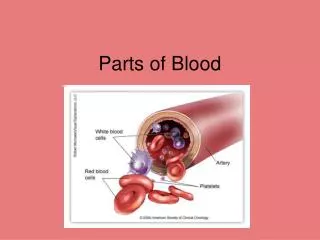
Blood • Fluid Tissue ~ connective • plasma • blood cells • hematocrit • red blood cells 45% • Plasma 55% • Buffy coat less than 1 % contains white cells and platelets
Composition & Character • Plasma • water • 90% • protein • antibodies albumin fibrogen • electrolytes • Na + K + Ca + Cl - Mg + • other components • gases • O2 and CO2 • glucose • fatty acids • vitamins
Red Blood Cells • Erythrocytes • Transport oxygen to cells • Mature RBC lack a nucleus- eject it • Live 120 days – destroyed by the spleen • Made in red bone marrow • Small biconcave discs thinner in center • Females: 4.3-5.2 million cells/mm3 • Males: 5.1-5.8 million cells/mm3
RBC • Hemoglobin • Iron containing pigment • 12-18 g/100ml • Single cell has about 250 million hemoglobin molecules can bind with 4 oxygens Hematopoiesis- blood cell formation red bone marrow stem cells
RBC • Life span – 120 days • Anemia – decrease in O2 carrying capacity • Hemoglobin and or RBC deficiency • Symptoms: pale, cold, tired, short of breath • Causes • Sickle cells B12 deficiency • Hemorrhage Low iron • Bacterial infections
Platelets • Thrombocytes • Cell fragments • 300,000/mm3 • Hemostasis- stops blood flow “clots” • Platelets cling to damaged site, blood clotting factors and fibrogen form fibrin and then clot • Hemostasis disorders thrombus embolus “clots” hemophilia - no clots
White Blood Cells- Leukocytes • defense and immunity • contain nuclei and organelles • 5000 - 10,000 WBC’s • granular leukocytes • neutrophil’s ~ 3,000 - 7,000 54-62% of WBC • phagocytes • multilobed nucleus stain pink grains deep purple • eosinophils ~ 100-400 1-3% of WBC • chemicals to kill parasitic worms allergies • red granuals blue-red bilobed nucleus • basophils ~ 20-30 less than 1% of WBC • secrete histamines - vasodilators • chemicals to kill foreign substances • few large blue-purple grains • u or s shaped nucleus
Agranulocytes • Monocytes 100-700 3-9 % of WBC • Large cells two to three times larger than RBC • Phagocytes • Present in chronic infections • Lymphocytes ~ 1500 – 3000 25-33% • small cells - r.b.c size • large dark purple nucleus • Provide immunity B cells and T cells • Secrete antibodies
WBC count • leukocytosis above 11,000 cells / mm 3 • infection • leukopenia • low count • drugs steroids flu mumps measles AIDS • leukemia • too many immature WBC’s > 17,000 • mononucleosis • too many abnormal monocytes
Blood Groups • Human Blood Groups • 30 common antigens on RBC’s • Antigens- agglutinogens • proteins on cell surfaces • Antibodies- agglutinins • proteins made in response to foreign antigens • agglutination • “clumping” • binding of antibodies to foreign antigens
Blood Groups • ABO Systems
Blood Groups • RH System • Rh – mother can make antibodies against developing Rh+ fetus • eight different kinds of Rh antigens • most important is antigen D have Rh + • lack antigen D Rh - make Rh antibodies • Blood Typing • cross matching