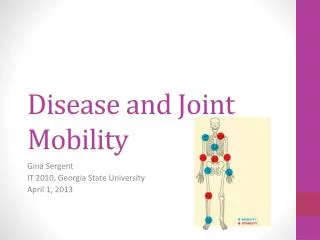
Disease and Joint Mobility
80 likes | 203 Vues
This presentation discusses the impact of chronic diseases such as Chronic Obstructive Pulmonary Disease (COPD) and Parkinson's Disease on joint mobility, outlining how physical therapists can assist patients in coping with these challenges. COPD hampers skeletal muscle function due to inadequate oxygen supply, while Parkinson’s leads to uncontrollable movement disorders affecting mobility. Strategies for managing these diseases include medication, exercise, and therapy. Understanding these connections is vital for effective treatment and improving patients' quality of life.


Disease and Joint Mobility
E N D
Presentation Transcript
Disease and Joint Mobility Gina Sergent IT 2010, Georgia State University April 1, 2013
Introduction • This presentation will show what diseases contribute to joint mobility and how Physical Therapists can help. • We will learn about Pulmonary Disease, Parkinson’s Disease, and ways to cope with the joint problems that these disease cause.
Chronic Obstructive Pulmonary Disease (COPD) • This disease debilitates people from having proper skeletal muscle function. • The disease is related to the lack of air that is able to reach the lungs • In turn the muscles do not get enough oxygen, making it difficult for the joints to move properly
Ways to Cope with COPD • Using proper medicine to open up airways, allowing easy passage for oxygen into the lungs • Stop smoking • Get out and move around when on medicines to help build skeletal muscle for easier movements and less pressure on joints. • Have the proper diet
Parkinson’s Disease • This disease is when a person experiences movement disorders that are uncontrollable. • Examples: shaking, slowness of movement, rigidity, stiffness and difficulty walking. • Can cause major stress on joints and hinder mobility • Cannot be cured
Ways to Cope with Parkinson’s Disease • Learning to manage stress • Brain training games • Medication • Exercise
What Physical Therapy can do to Help • COPD patients can go to a physical therapist for exercise training to strengthen existing muscles when breathing is hard. It can also be used to help with proper bone structure. • Parkinson’s patients, with constant therapy, can lessen or even stop the uncontrollable movements. It can also help the patient retain certain independent living skills and move more freely.
Conclusion • In order for a patient to cope with and a therapist to help with a certain disease that hinders joint mobility, they need to have to proper knowledge and skills to obtain a positive outcome. • Proper joint mobility can help people relax and more around free from discomfort.