Download
1 / 37
380 likes | 488 Vues
Volcanoes are dynamic geological structures where magma escapes from beneath the Earth's surface. The movement of magma leads to eruptions, which can vary dramatically based on the type of volcanic zone, such as mid-ocean ridges, subduction zones, and hot spots. This overview covers two primary types of lava—felsic and mafic—along with their characteristics. It details the formation of different volcanoes, including shield, cinder cone, and composite types, while explaining how volcanic activity shapes the landscape and impacts the environment.

E N D
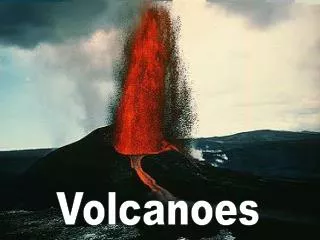
volcanism:any activity that includes the movement of magma toward the surface of the Earth volcano: place where magma reaches the surface
magma: liquid, molten rock underground • lava: magma that reaches the surface • lost gas, gained rock
Major Volcanic Zones • MID-OCEAN RIDGE: occurs where plates are moving apart • lava flows out smoothly and fluidly from cracks
SUBDUCTION ZONE: occurs at subduction boundaries • usually explosive and erupted material is mostly lava
HOT SPOTS: areas of volcanic activity in the middle of a lithospheric plates
two types of lava: • felsic: much silica (Rhyolitic), light-colored, slow moving (viscous), continental crust
mafic: low silica (basaltic), dark-colored, fast moving (least viscous), oceanic crust
Pahoehoe (puh-HOEEE-hoeee): thin mafic lava. • usually hardens with wrinkled surface • means “ropey” in Hawaiian Pahoehoe Lava
Aa Lava • Aa (AH-ah): sharp block shapes of hardened mafic lava. • caused by rapid cooling on surface of lava • breaks into jagged chunks
Aa Lava Pahoehoe Lava
many magmas contain dissolved gases that are given off • water vapor, carbon dioxide (CO2), sulfur (S) • magmas with more gases have more explosive eruptions
tephra:solid fragments ejected from a volcano ash (<2mm) bombs lapilli (<64mm) blocks Sometimes called pyroclastic material
Vent: opening from which lava flows • Crater: funnel-shaped pit or depression at top of volcano • Caldera:craters whose walls have collapsed
Shield Volcano • composed of quiet lava flows • form gently sloping, dome- shaped mountain • basaltic (mafic) magma
Cinder Cone Volcano • Made mostly of tephra and other rock particles • Formed from explosive eruptions • Not very high, narrow base, steep sides • Rhyolitic (felsic) magma
Composite Volcano • built up of alternating layers of rock & lava • explosive eruptions at first with tephra, then quiet with lava • forms large, cone-shaped mountains • made of rhyolitic & basaltic magma