
Lead Information and Prevention Tips for Community Members
E N D
Presentation Transcript
Lead Information for Community Members
Web Cast Objectives • What is lead? • Where is lead found? • How are people exposed to lead? • What are the health risks of lead? • How can you prevent exposure to lead? • What to do if you have been exposed to lead? • How to get more information?
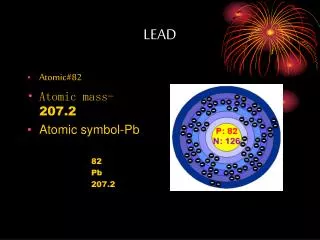
What is lead? • Lead is a soft gray metal element that occurs naturally in the earth. • For many years, lead was added to - paint, - gasoline, - ongoing or historic mining, and - commercial or industrial operations.
What products may cause lead exposure? Past product exposures • Leaded gasoline Present product exposures • Imported canned food, • Imported jewelry, and • Some products used in home remedies.
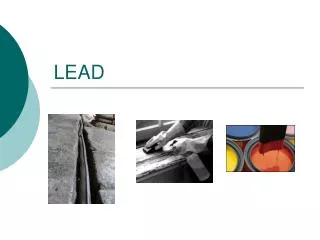
What are the sources of lead in the environment? • Homes that have cracked and peeling old lead paint on their walls. • Home renovations that disturb old lead paint can spread invisible lead dust. • Lead from old lead paint may contaminate household dust and nearby soil.
What are the sources of lead in the environment? (continued) • Soil may still have high lead levels resulting from pre-1976 gasoline. • Lead enters the dust or air in businesses that involve lead. • Lead mines or smelters may contaminate nearby soil or water.
How are people exposed to lead? • Ingestion of foods, water, alcohol may be significant for certain populations. • Ingestion primary way general population, especially children, are exposed to lead. • Inhalation of lead dust contributes to a build up in the body.
How are people exposed to lead? (continued) • Inhalation may be the major route for workers in lead-related occupations. • Ingestion of certain home remedies. • Ingestion of lead paint or inhalation of lead dust or fumes is a major source for children in the United States.
What happens when lead enters the body? • Lead is stored for long periods in mineralizing tissue such as teeth and bones. • Lead is can be released again into the bloodstream from these sources during times of bodily stress, such as ~ pregnancy ~ breastfeeding ~ calcium deficiency ~ osteoporosis (thinning of the bones)
Lead in home environments • Most lead exposure in the U.S. today occurs in older homes with deteriorated leaded paint. • Children are at greatest risk of lead poisoning from their homes. • Most children are exposed to lead in dust (not by eating paint chips).
walls windows doors bare soil Lead in dust tracked in porch Lead in home dust • The more lead in the dust in a home, the higher the levels of lead in children. • There is no safe threshold for lead.
Lead in work environments Jobs that may involve lead include: • Construction, • Automobile repair, • Lead mining, • Plumbing, • Printing, • Military and police work involving fire arms, and • Home renovations.
Lead in hobby activities Hobbies that may involve lead include: • Car radiator repair, • Artistic painting, • Pottery glazing, • Stained glass making, • Glass, metal or electronics soldering, • Target shooting, and • Making of bullets, slugs or fishing sinkers.
Lead in drinking water • Lead can enter water by leaching from • Lead-containing pipes • Faucets • Solder • Boiling water from the faucet does not get rid of lead. • Running cold water before using may reduce exposure.
Lead in commercial products • Lead is still used in products such as: • Bridge paint • Computers • Solder • Pewter • Costume jewelry
Lead in contaminated products • Lead can contaminate food, such as root vegetables, or beverages through • Production • Packaging • Storage
Lead in contaminated products (continued) • Imported ceramic tableware used for storage or serving food or beverages may cause exposure. • Imported lead-glazed pottery is a potential source often overlooked.
Lead in ethnic products • Mexican treatments: Azarcon and greta (also known as liga, Maria Luisa, alarcon, coral, and rueda). • Asian treatments: chuifong, tokuwan, ghasard, bali goli, and kandu. • Middle eastern treatments or cosmetics: alkohl, saoott, cebagin.
Summary of lead in the environment • Lead is found throughout our environment. • Lead levels vary from place to place, depending on historic use. • May be elevated in soil near roadways (from pre-1976 gasoline). • Communities near lead mining or smelting facilities may have high lead in soil, water, or air. • Smaller businesses and industries that involve lead may contaminate local area.
Who is most at risk of lead exposure? • Children living in older housing • Pregnant women and developing fetus • Certain occupations
What parts of the body does lead affect? • The brain is very sensitive to lead. • Exposure to high levels of lead can permanently affect the brain, bones, kidneys, and the heart.
What levels of lead cause health effects? • Lead can cause harm even at very low levels, especially in young children. • There is no safe threshold for lead. • At very high levels, lead can cause brain damage, coma or even death. • Adults experience similar effects, but generally at higher levels of exposure.
What are the effects of lead exposure on young children? • Lowered IQ • Learning disabilities • Attention deficit and hyperactivity • Other behavioral issues • Impaired hearing • Anemia • Decreased growth
What are the effects of lead on adults? • Similar to children, although generally at higher lead levels. • Long-term exposure may affect thyroid. • Problems with pregnancy and offspring. • May also affect reproduction/fertility.
When do symptoms appear? • Often no visible effects, even at levels that can cause damage. • Only way to determine high blood lead level is a blood test. • The more lead you are exposed to over time, the greater your risk of disease. • Most important thing is to see a doctor.
Are certain groups more sensitive to lead exposure? • Exposure most harmful to young children and the developing unborn child. • Lead is passed from the mother to the developing unborn child and may cause brain damage.
Is there a medical test to find out if I was exposed to lead? • Children should have their blood tested at ages one and two. • Older children at risk of lead poisoning should also be tested. • Adults who may be exposed to lead at work should also be tested.
How can I prevent exposure to lead in my home? • If your home was built before 1978, you should have it tested for lead. • Make sure all paint is in good condition. • Wet-clean all surfaces, especially window sills, at least every week. • Wash children’s hands frequently. • Cover bare soil in the yard. • Learn about lead-safe work practices when doing work on your home that disturbs paint.
How can I prevent exposure to lead in my workplace? If you work around lead paint, solder, or other products that contain lead: • Ask your doctor to test your blood for lead. • Talk to your workplace health and safety officer. • Wear protective clothing and use a respirator as appropriate. • Wash hands carefully and change clothing before going home.
Lead in workplaces For possible lead exposures at work, you can contact: • Your workplace health and safety officer • Occupational Safety and Health Administration (OSHA) • National Institute for Occupational Safety and Health (NIOSH)
Lead in home environments • Your local health department • National Lead Information Center (1-800-424-LEAD) • Alliance for Healthy Homes: (202) 543-1147 or www.afhh.org • Environmental Protection Agency publications on lead:www.epa.gov/lead/pubs For assistance with questions or concerns about lead and your home, please contact:
Summary • Lead is found in older paint, contaminated soil, and contaminated products. • Leaded dust in older homes comes from normal friction, deterioration, or repair work. • Lead poisoning can cause brain damage, kidney disease, and hypertension. • Lead is very dangerous to young children and the developing fetus.
How can I get more information? • Agency for Toxic Substances and Disease Registry (ATSDR) • Referrals to occupational and environmental health clinics. • Their specialists can recognize, evaluate, and treat illnesses resulting from exposure to hazardous substances. • www.atsdr.cdc.gov; 1-800-CDC-INFO • Regional poison control center. • State, county, or local health department.