SlideServe
Menu
Préférences
© SlideServe · v2026

LEAD

wbowers avatar
14 diapositives · 463 Views · Jan 04, 2020

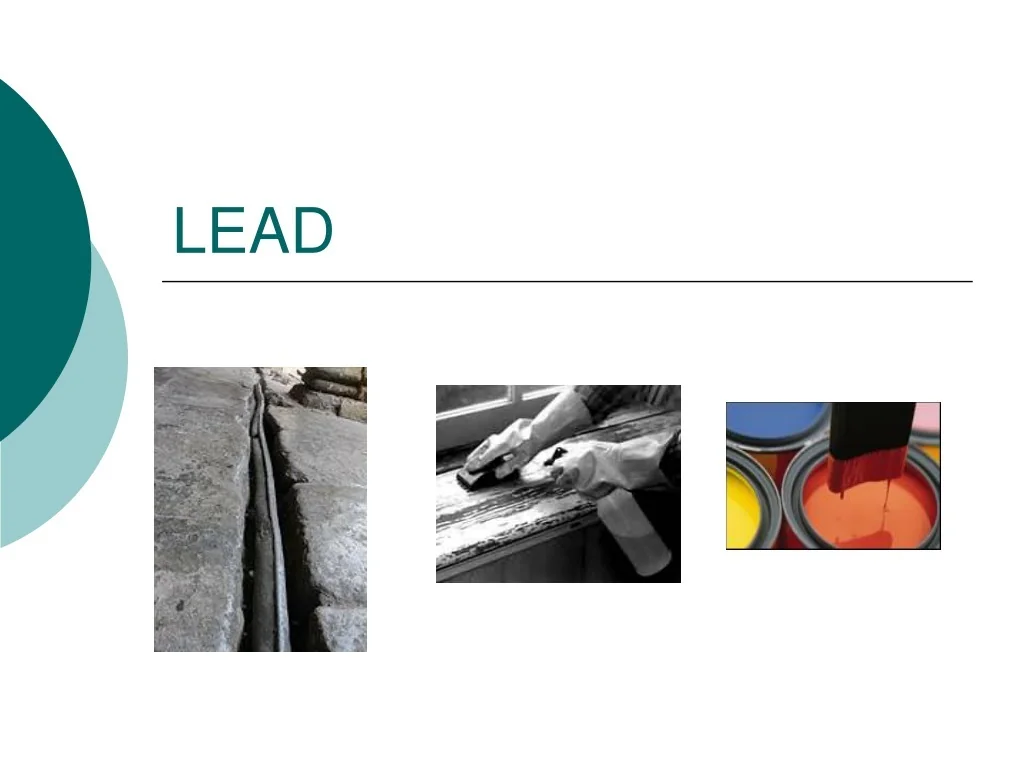
LEAD. Why are we worried about lead?. Protection of children primarily Most buildings are open to the public, i.e. “Public Buildings” Workers could take dust home on their clothes, creating exposure to family members Protection of workers/occupants
LEAD - slide 1
01 / 14LEAD
1 / 17

Télécharger la présentation

LEAD
Une image / un lien ci-dessous est fourni (tel quel) pour télécharger la présentation

Politique de téléchargement : le contenu du site vous est fourni TEL QUEL pour votre information et votre usage personnel ; il ne peut être vendu, concédé sous licence ni partagé sur d’autres sites sans l’accord de son auteur.Le contenu vous est fourni TEL QUEL, pour votre information et votre usage personnel uniquement. Téléchargez la présentation en cliquant sur ce lien. Lors du téléchargement, si vous ne parvenez pas à télécharger une présentation, l’éditeur a peut-être supprimé le fichier de son serveur.Pendant le téléchargement, si vous ne parvenez pas à obtenir une présentation, le fichier a peut-être été supprimé par l’éditeur.

F I N

Plus de contenu associé

Transcription de la présentation
  1. LEAD

  2. Why are we worried about lead? • Protection of children primarily • Most buildings are open to the public, i.e. “Public Buildings” • Workers could take dust home on their clothes, creating exposure to family members • Protection of workers/occupants • Workers and occupants could get exposed via inhalation/ingestion of lead dust

  3. Lead Facts Lead can be found: • Paints and coatings up until 1980. Industrial paints still contain lead in high levels. • Printing equipment • Batteries • Plumbing • Soil • Water • Imported food • Imported medicines and cosmetics • Radiation shielding

  4. Lead Hazards • Children, Pregnant women & developing fetuses most at risk of harm from exposure • Lead is readily absorbed and distributed. Collects in the brain, bones, teeth and organ tissues. • Lead overexposure can lead to damage to: • Nervous system • Kidneys • Blood-forming system • Digestive system • Reproductive system

  5. Additional Effects on Children • Brain damage • Behavior and learning problems • Slowed growth • Hearing problems • Headaches

  6. Children more at risk of lead poisoning due to: • Nervous system sensitivity • Absorption levels • Pica: putting toys, hands, etc. into mouth

  7. Lead exposure routes • Hand to mouth contact with lead-contaminated: • Dust • Soil • Water • Other products • Inhalation of dust and fumes

  8. Lead poisoning • Checked via blood test Children/pregnant women: >10 microg/dl - elevated >20 microg/dl - lead burdened Adults: > 40 microg/dl - elevated

  9. Lead regulations Activities related to disturbance of lead are regulated by: • Department of Health Services (DOHS): Housing and Public buildings • For operations involving lead at 0.5% content • Federal and Cal-OSHA: Worker Safety • Operations that involve lead in any detectible amount • Federal and Cal-EPA: Hazardous waste • For waste containing lead equal to or above 1000 ppm lead

  10. What is being done to prevent lead exposure to employees? • All surfaces and materials to be disturbed are sampled and analyzed for lead content. • Lead-containing materials are handled by certified employees and contractors • The campus drinking water is regularly tested for lead.

  11. OSHA requirements Include: • Proper work techniques • PPE • Worker training • Medical monitoring

  12. Prevention of exposure to University community… • EH&S reviews all repair/remodeling plans • EH&S determines if work can be completed in-house or if an outside contractor is required. • Facilities Management Project Managers are provided with training

  13. In-house lead disturbance • Must be reviewed with Office of EH&S to develop work plan, ensure worker and occupant safety and collect worker exposure sampling.

  14. Employee/SupervisorRequirements • Building Materials must NOT be disturbed without authorization from EH&S