Plant-like Protists
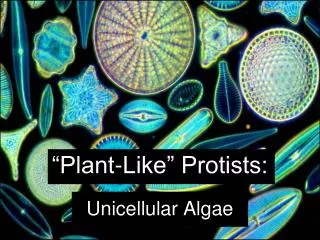
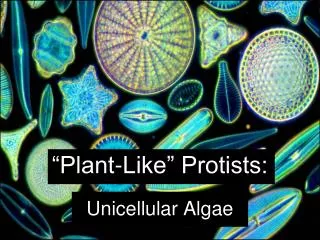
Diatoms are fascinating plant-like protists that play a crucial role in aquatic ecosystems. Together with photosynthetic bacteria, they form phytoplankton, the foundation of the aquatic food chain essential for ecological stability in oceans. Diatoms exhibit a diversity of structures, with some being unicellular and others multicellular, such as seaweeds. They can also live in colonies. Importantly, they reproduce both sexually and asexually. This overview highlights their importance and structure, with further details available in our biology textbook, particularly on page 583.

Plant-like Protists
E N D
Presentation Transcript
Plant-like Protists Mr. Chapman Biology 20
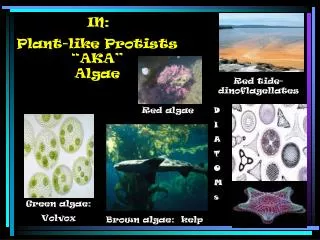
Diatoms Unique Plant-like Protists With Various Structures
Diatoms More Pictures of Diatoms Also see page 583 of textbook
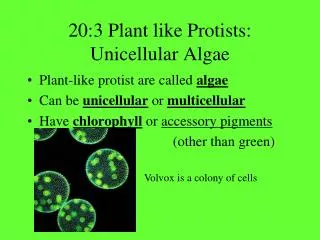
Some Plant-Like Protist Details • Many plant-like protists are free living aquatic organisms. Together with certain photosynthetic bacteria, they make up the group called phytoplankton. • Phytoplankton are the basis of the aquatic food chain, and are necessary for ecological stability in the ocean. • Some plant-like protists are unicellular and some are multicellular, such as seaweeds.
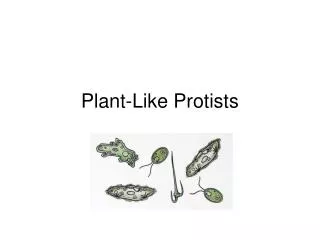
Plant-like Protists Continued... • Other plant-like protists live in colonies – they exist as unicellular organisms, but always travel together in groups. • Algae are plant-like protists. • Remember that our example from previous classes of plant-like protists were euglena. That is the only plant-like protist you will be expected to remember structurally.
Important Forms of Cells Diploid Cells (2n) • Diploid cells contain a full set of chromosomes. • All the other cells in the human body besides sperm and egg are diploid. Haploid Cells (1n) • Haploid cells contain half the chromosomes of a complete cell. Also called gametes. • Examples include sperm and eggs in humans.