Jackson Years
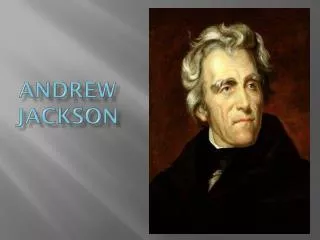
The election of 1824 was pivotal in U.S. history, featuring Andrew Jackson, Henry Clay, and John Quincy Adams. Jackson won the popular vote but lacked a majority in the Electoral College, leading the House of Representatives to decide. Clay's influence secured Adams' presidency, who then appointed him Secretary of State. In 1828, the Democratic Party emerged, with Jackson winning and implementing the "Spoils System." His presidency faced challenges, including the Indian Removal Act and the contentious tariffs, shaping modern American governance.
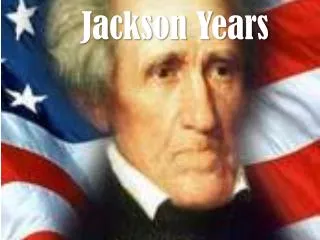

Jackson Years
E N D
Presentation Transcript
Election of 1824 • Andrew Jackson, Henry Clay and John Quincy Adams run for Presidency • Jackson received the most popular votes, but not a majority of electoral votes • The House of Representatives must decide the next President • Clay convinced them to vote for Adams • Adams became the 6th President • Adams appointed Clay his Secretary of State
Election of 1828 • New political party formed • Called the Democratic Party • Organized by Martin Van Buren
Jackson Won • Jackson began Patronage with the “Spoils System” in which he gave jobs to his supporters and family • Jackson dealt with the “Indian Problem” • Indian Removal Act of 1830 • Removed Indians to western lands despite Supreme Court’s ruling that it was unconstitutional • Trail Of Tears – Native Americans forced on an 800-mile journey that began in Georgia and ended in Oklahoma
Conflict in the Jackson • Protective Tariff raised in 1828 (before Jackson) • South (John C. Calhoun) called it the “Tariff of Abominations” • South forced to buy Northern goods rather than cheaper ones from Europe • John C. Calhoun felt that states had the right to nullify a law within their borders
South Carolina threatened to secede • Congress Passes the Force Bill • Allowed the government to use the army and navy against South Carolina • South Carolina kept the tariff but nullified the Force Bill
Jackson and the Bank • Jackson waged war on, and defeated, the bank • The Whig Party was formed – they disapproved of Jackson’s Actions • Many believed Jackson had abused his powers as president