Build it Back Green Infrastructure
Explore innovative approaches to building green and resilient infrastructure in the face of climate challenges with GHD's General Manager Client Development, Nick Apostolidis. Discover key points on creating sustainable water, transportation, and power infrastructure, along with a framework for sustainable infrastructure development. Learn about water cycle management, transportation measures, and power generation strategies that prioritize resilience and sustainability. Uncover the importance of incorporating sustainability into management systems and decisions for optimized resource use. Join us in shaping a resilient future together.

Build it Back Green Infrastructure
E N D
Presentation Transcript
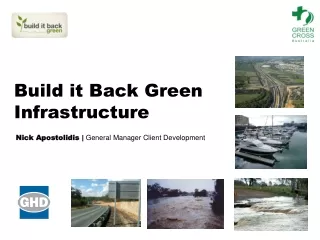
Build it Back GreenInfrastructure Nick Apostolidis | General Manager Client Development
Key Points • In the land of droughts and floodingrainswehave to build infrastructure that is more resilient • We can rebuild the infrastructure to be greener (noting time, budget and resource constraints) • No Silver Bullets • Need a framework that encourages green (sustainable) solutions • Need some pilot projects to show us the way • Need the will, vision, passion and todayyour ideas
Water • We can make water infrastructure more resilient to droughts, floods and cyclones. We lead the world. Security through diversity • Demand management • Water grid • Use Tugan desal plant during floods Water Cycle Management • Pimpama Coomera • Olympic Village
Transportation • Many small measures combined can make a difference. • Recycled material (concrete, asphalt) • E-crete • Low temperature bitumen • LED traffic lighting • Fuel efficient alignments • Optimized haulage routes • Conjunctive flood relief / retardation • Profiles that reduce fuel • Gabion weirs • Concrete sleepers • LED signals and lighting • Electronic train breaking • Trains instead of trucks • Use of locally sourced material
Power generation & distribution • Lessons from recent floods identified many improvements that can be made to reduce social disruption and economic loss associated with failure in power generation and distribution. • Underground transmission lines (especially urban areas) • Flood immune sub stations • Flood immune standby generators • More standby generators for critical infrastructure and facilities • Diversify energy sources • Redundant supply routes • Demand management • Distributed power generation
A framework that supports sustainable infrastructure at design, construction and operation? (source AGIC) • Management Systems & Governance • Management systems that incorporate sustainability • Making decisions • Purchasing & procurement • Climate change vulnerability • Knowledge sharing & capacity building • Optimise Use of Resources • Energy and carbon • Water • Material selection & use • Minimise Emissions, Pollution & Waste • Discharges to air, water and land • Land management • Waste management • Protect Ecosystems • Value People & Place • Health, wellbeing and safety • Natural & cultural heritage values • Stakeholder participation • Urban & landscape design & aesthetics