
SlideServe
Menu
Préférences
© SlideServe · v2026

Cognitive Neuroscience

sari avatar
19 diapositives · 737 Views · Jul 26, 2014

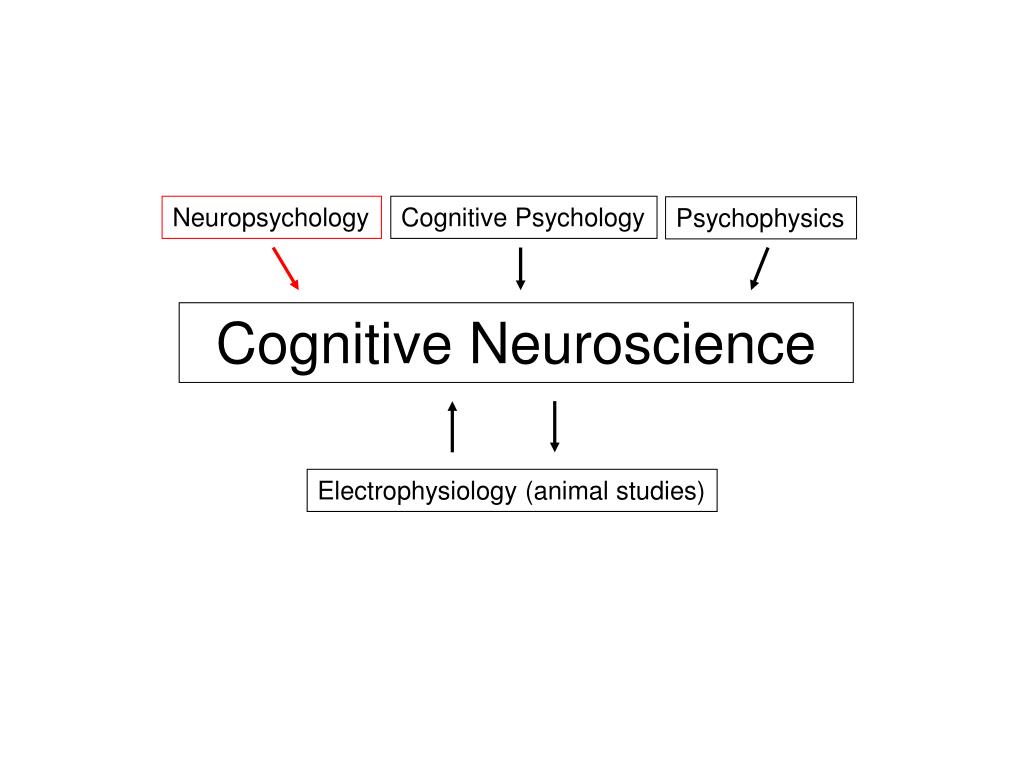
Neuropsychology. Cognitive Psychology. Psychophysics. Cognitive Neuroscience. Electrophysiology (animal studies). Brain Lesions (Chapter 5) (Cognitive Neuropsychology ). The “traditional” approach to establishing a connection between the mind & brain.
Cognitive Neuroscience - slide 1
01 / 19Cognitive Neuroscience
1 / 17

Télécharger la présentation

Cognitive Neuroscience
Une image / un lien ci-dessous est fourni (tel quel) pour télécharger la présentation

Politique de téléchargement : le contenu du site vous est fourni TEL QUEL pour votre information et votre usage personnel ; il ne peut être vendu, concédé sous licence ni partagé sur d’autres sites sans l’accord de son auteur.Le contenu vous est fourni TEL QUEL, pour votre information et votre usage personnel uniquement. Téléchargez la présentation en cliquant sur ce lien. Lors du téléchargement, si vous ne parvenez pas à télécharger une présentation, l’éditeur a peut-être supprimé le fichier de son serveur.Pendant le téléchargement, si vous ne parvenez pas à obtenir une présentation, le fichier a peut-être été supprimé par l’éditeur.

F I N

Plus de contenu associé

Transcription de la présentation
  1. Neuropsychology Cognitive Psychology Psychophysics Cognitive Neuroscience Electrophysiology (animal studies)

  2. Brain Lesions (Chapter 5)(Cognitive Neuropsychology) • The “traditional” approach to establishing a connection between the mind & brain. • Limitation of imaging (or any correlational) methods • Does the activation have anything to do w/ function? • Car analogy • One way to prove something is necessary… • Take it out

  3. History LANGUAGE VISION

  4. Cortical Lobes Vision, Audition, Language “What vs. Where” Recognizing words Pathways/Networks (10’s cm) Cortical Areas (1 cm) Motion direction Directions of motion, orientation Cortical Column(.1 cm, 1 mm) Computations Lateral inhibition Neural Circuit (.01 cm, .1 mm) Neuron (pfs) Code Levels of Analysis Anatomical Functional

  5. Advancements • (1) MRI: localize brain injury in vivo • Very precisely locate injury and adapt tests accordingly • “patient populations”: identify groups of individuals with common brain injuries

  6. Advancement • The use of control subjects

  7. Advancements • (2) Cognitive psychology paradigms • Area “A” is important for reading • What are the components of reading? • Perceiving letters • Letter strings activate corresponding meanings • Link words coherently • What specific component is affected by area A damage?

  8. Disengage – Shift – Engage XXXX Disengage – Shift – Engage

  9. Cognitive Psychology Perspective • Mental processes are composed of elementary “mental operations” • These operations are localizable in time • The operations are localizable in discrete, contiguous regions of the brain

  10. Single and Double Dissociations • Start with a model/hypothesis • Facial recognition and emotion recognition (based on facial features) are different processes Emotion task Recognition task Performance (% Correct) Region 1 (FFA) Region Damaged

  11. Single and Double Dissociations • Start with a model/hypothesis • Facial recognition and emotion recognition (based on facial features) are different processes Emotion task Recognition task Performance (% Correct) Performance (% Correct) Region 1 (FFA) Controls Region Damaged

  12. Problems with Single Dissociation • Possible alternative interpretations: • Recognition task might be more difficult • See “task-resource artefact” in text (p 82)

  13. Single and Double Dissociations • Start with a model/hypothesis • Facial recognition and emotion recognition (based on facial features) are different processes Emotion task Recognition task Performance (% Correct) Performance (% Correct) Region 1 (FFA) Controls Region 2 (STS) Region Damaged

  14. Double Dissociations (and fMRI) • Start with a model/hypothesis • Facial recognition and emotion recognition (based on facial features) are different processes Emotion task Recognition task fMRI Activation Region 1 (FFA) Region 2 (STS)

  15. Problems w/ lesions • A process must be localizable to specific regions • Compounded by lack of specificity of lesions • Lesion may disrupt connectivity– other “non-damaged” areas might be non-functioning. • Assumption that intact regions continue to function in the same way • No timing information

  16. Transient “Lesions” • Transcranial Magnetic Stimulation • Magnetic field induced disruption of neural activity • A brief pulse is applied that causes neural “activity” for 10’s ms • If the area is involved in the task, the “dual firing” (task and to the TMS pulse) results in behavioral disruption

  17. Advantageous • Quickly reversible (no reorganization as w/ true lesions) • Within-subject designs • Moveable lesions • Very focused (~ 1 cm resolution) • Precise timing