
Mastering Time Concepts: A.M. and P.M., Days, and Months
E N D
Presentation Transcript
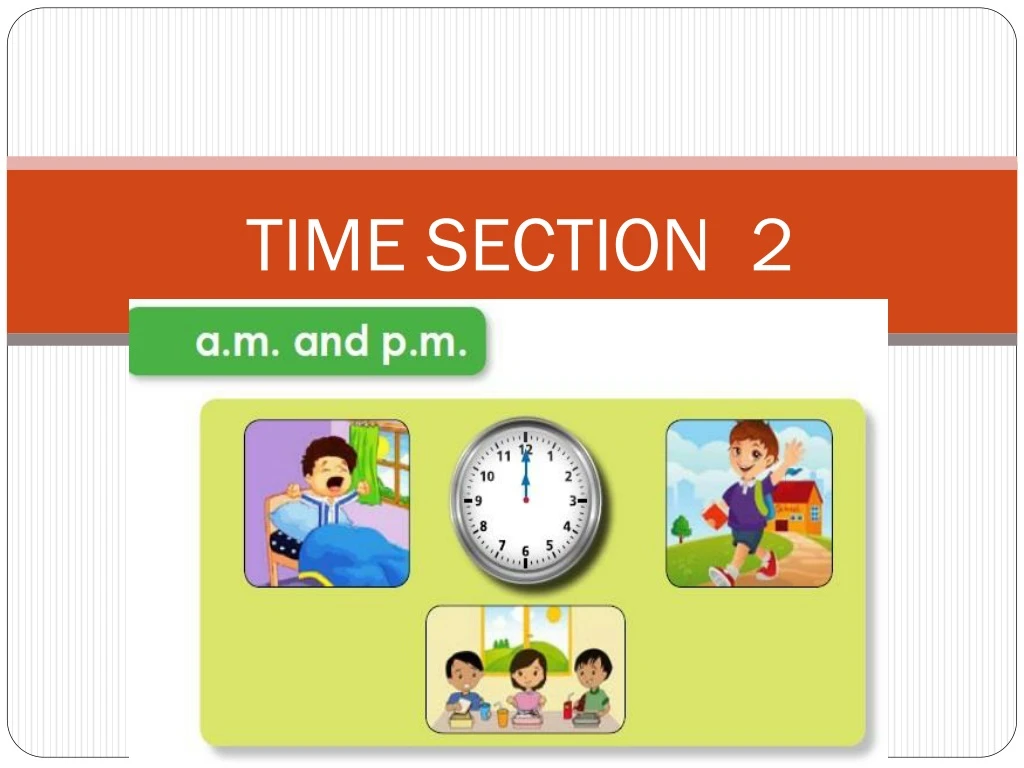
Objectives • By the end of this section, students should be able to • Differentiate between a.m and p.m • Use a.m and p.m in real life situation • Name days of the week and months of the year
Starter activity: Corporative learning Teacher’s Note: Ask students what activities they do before noon and after noon
Teacher-student discussion So, can you discuss what you have learned about a.m and p.m from the video?
Activity 1 Read the event and decide if it happens in the a.m or p.m. Click on the chosen answer.
Activity 1 Complete the table
Activity 2: Consolidation work Write down the time shown in the picture using a.m and p.m.
Activity 3 Complete the table
Calendar What can you observe?
Note • What can you notice about the number of days in a month?
Demonstration time Have each student use their fists to count number of days in each month
Activity 4 • January • February • March • April • May • June • July • August • September • October • November • December Choose from here
Think-pair share: Consolidation work Fill in the blanks
Individual activity: Reflection time! How many days are there in all in one year? Note: Teacher explains Leap year
Representation of date Fill in your date of birth
Activity 5 Complete the table below. One example has been done.
Oral discussion Study the dates for the month of June below & answer the questions. What day is the 22nd of June? How many Mondays are there in this month?