
Lead Poisoning in Children: Causes, Effects, and Prevention
E N D
Presentation Transcript
Lead Poisoning St. Albans Health Department
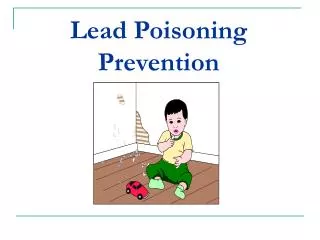
Lead Poisoning in Children • One of the most common environmental child health problems today • Caused by too much lead in the body • Especially harmful to children under 6
Lead Poisoning Can Cause • Brain damage • Mental retardation • Behavior problems • Liver and kidney damage • Hearing loss • Developmental delays • Death (in extreme cases)
Where Does Lead Come From? • Paint • Dust • Soil • Water
Lead in Paint • In houses built before 1978, 75% contain lead paint • In houses built before 1960, paint may contain 50% lead by weight
Lead in Dust • High levels of dust found on windowsills and in window wells • Results from flaking paint or friction of lead paint surfaces or from soil containing lead
Lead in Soil • Soil contaminated by • peeling exterior paint • leaded car exhaust • pollution from industry • Highest lead levels in soil found close to foundations painted with lead paint
Lead in Water • About 20% of lead exposure comes from drinking water • Lead leaches into water from • old lead pipes and service lines • home plumbing • Leaded solder still in use until 1980s • Faucets and fittings may contain 8% lead
Measuring Lead • Can be measured only by blood lead test • Blood lead levels • Less than 10 ug/dL currently considered normal • 10 19 ug/dL mild lead poisoning • 20 44 ug/dL moderate lead poisoning • 45 69 ug/dL severe lead poisoning