Download

1 / 10
100 likes | 245 Vues
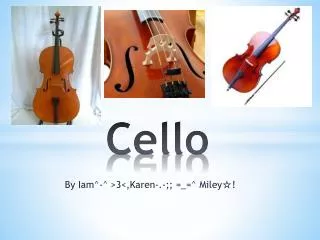
Explore how vibrato enhances the sound produced on a cello, creating a unique musical effect through regular, pulsating changes in pitch. This study employs GLX Sound Sensor measurements in a Data Studio program to analyze various notes played on the D string, including C, G, and A. With string frequencies ranging from C2 at 65.41Hz to A3 at 220Hz, discover how vibrato contributes to the richness and depth of cello performance. Join us in understanding this essential technique in string instrument play.

E N D
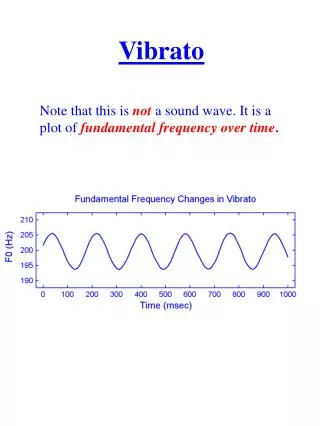
Background • Vibrato = “musical effect consisting of regular, pulsating change of pitch”
Equipments • Data Studio program • GLX Sound Sensor
Playing C on D string Without With
Playing G on D string Without With
Playing A on D string Without With
Additional Information • Cello Strings C2=65.41Hz, G2=98Hz, D3=146.8Hz, A3=220Hz • All the notes were played on the D string. (The frequencies for the notes played are highlighted) http://www.seventhstring.com/resources/notefrequencies.html