(12)
D. (9). FS0. FF7. A. B. C. F. H. FF5. SF12. FS0. SS8. (12). (10). (12). (11). (10). SF21. FF5. SS3. E. SS8. FS7. (18). FF3. G. I. FF3. (11). (7). 0. 12. 7. 17. 7. 19. ES for B: (EF-duration) 17-10.

(12)
E N D
Presentation Transcript
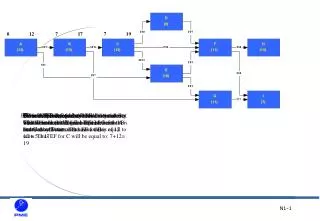
D (9) FS0 FF7 A B C F H FF5 SF12 FS0 SS8 (12) (10) (12) (11) (10) SF21 FF5 SS3 E SS8 FS7 (18) FF3 G I FF3 (11) (7) 0 12 7 17 7 19 ES for B: (EF-duration) 17-10 Given the precedence network shown above with the indicated logical dependencies between activities We set ES for A equals to zero EF for A will be equal to 12 since A starter at week 0 and has a duration of 12 There is FF5 dependency between A and B, which means that B can not finish before A is finished by 5 units. Thus EF for B is equal to 12 + 5 = 17 Between B and C we have SF12 dependency. That is between the finish date of C and the start date of B we must have a delay of 12 units. Thus EF for C will be equal to: 7+12= 19 C has a duration of 12 units and therefore its ES will be at (19-12= 7) . This means that B and C should start at the same time
D (9) FS0 FF7 0 12 7 17 7 19 A B C F H FF5 SF12 FS0 SS8 (12) (10) (12) (11) (10) SF21 FF5 SS3 E SS8 FS7 (18) FF3 G I FF3 (11) (7) 19 28 10 28 ES for D: FS0 + 19= 19 (since FS0=0) EF for D: 19+9=28 We observe that for E there exists two alternative dependencies with C and A, we must find which of these dependencies gives the maximum ES for E and select it! Alternative 1: SF21 from C This gives us EF for E equals to 28, and ES equals to (28-18=10) Alternative 2: SS3 from A Based on this alternative, ES for E is 3. Alternative 1 SF21 from C ES = 10 Alternative 2 SS3 from A ES = 3 10 is the largest value, therefore the ES for E must be at 10 and early finish at 28
19 28 D (9) FS0 FF7 0 12 7 17 7 19 A B C F H FF5 SF12 FS0 SS8 (12) (10) (12) (11) (10) 10 28 SF21 FF5 SS3 E SS8 FS7 (18) FF3 G I FF3 (11) (7) 24 35 Similarly for F, we have 3 alternatives for ES: Alternative 1: FF7 from D, this gives us ES = 24 Alternative 2: FS0 from C ES, this gives us = 19 Alternative 3: FF5 from E ES, this gives us = 22 Alternative 1 from D gives us the largest ES value for F. therefore, ES for E is 24 and EF is equal to (24+311= 35)
19 28 D (9) FS0 FF7 0 12 7 17 7 19 24 35 A B C F H FF5 SF12 FS0 SS8 (12) (10) (12) (11) (10) 10 28 SF21 FF5 SS3 E SS8 FS7 (18) 24 35 FF3 G I FF3 (11) (7) 32 42 32 39 Similarly we find ES and EF for the rest of activities. total project duration is thus 42
19 28 D (9) FS0 FF7 0 12 7 17 7 19 24 35 32 42 A B C F H FF5 SF12 FS0 SS8 (12) (10) (12) (11) (10) 10 28 SF21 FF5 SS3 E SS8 FS7 (18) 24 35 32 39 FF3 G I FF3 (11) (7) back pass 24 35 32 42 35 42 We start now the back pass calculations and we select the finish date for the project (for both H and I) LF for H = 42 LF for I = 42 LS for I: 42-7= 35 LF and LS for activity F: we have two alternative back pass dependencies with activity H and I Alternative 1: SS8 between H and F, this dependency causes the LF for F to be 35 Alternative 2: SS8 between I and F, this dependency causes LF for F to be 38 During the back pass calculations we must select the minimum value between alternatives. Therefore LF for F is equal to 35 and LS: 35-11= 24 LS for H: 42-10= 32
19 28 D (9) FS0 FF7 0 12 7 17 7 19 24 35 32 42 A B C F H FF5 SF12 FS0 SS8 (12) (10) (12) (11) (10) 10 28 24 35 32 42 SF21 FF5 SS3 E SS8 FS7 (18) 24 35 32 39 FF3 G I FF3 (11) (7) 35 42 19 28 28 39 G is connected to I through dependency FF3, this gives LF for G equals to 39 and LS equals to (39-11=28) Activity D is connected to F through dependency FF7. LF for G is thus equals to 28, and LS equals to 19
19 28 D (9) FS0 FF7 0 12 7 17 7 19 19 28 24 35 32 42 A B C F H FF5 SF12 FS0 SS8 (12) (10) (12) (11) (10) 7 17 7 19 10 28 24 35 32 42 SF21 FF5 SS3 E SS8 FS7 (18) 12 30 24 35 32 39 FF3 G I FF3 (11) (7) 28 39 35 42 0 12 We apply the same procedure for the rest of activities. and we finally find LF for A equals to 12 and LS for A equals to 0
19 28 D (9) FS0 FF7 0 12 7 17 7 19 19 28 24 35 32 42 A B C F H FF5 SF12 FS0 SS8 (12) (10) (12) (11) (10) 0 12 7 17 7 19 10 28 24 35 32 42 SF21 FF5 SS3 E SS8 FS7 (18) 12 30 24 35 32 39 FF3 G I FF3 (11) (7) 28 39 35 42 0 0 0 0 0 0 2 4 3 Float calculations Float = LF- EF For I (42 - 39 = 3) Activity C: 19 - 19 = 0 Activity D: 28 - 28 = 0 Activity E: 30 - 28 = 2 Activity B: 17 - 17 = 0 Activity F: 35 - 35 = 0 Activity H: 42 - 42 = 0 Activity G: 39 - 35 = 0 Activity A: 12 - 12 = 0
19 28 0 D (9) FS0 FF7 0 12 7 17 7 19 19 28 24 35 32 42 0 0 0 0 A B 0 C F H FF5 SF12 FS0 SS8 (12) (10) (12) (11) (10) 0 12 7 17 7 19 10 28 24 35 32 42 SF21 FF5 SS3 2 E SS8 FS7 (18) 12 30 24 35 32 39 FF3 4 3 G I FF3 (11) (7) 28 39 35 42 The critical path of the network is: A-B-C-D-F-H