
Gender
E N D
Presentation Transcript
Gender The biosocial approach to gender development
Learning objectives • Explain what is meant by biosocial theory • Be able to describe how concepts of gender are constructed • Understand the critique of gender research offered by social constructionists.
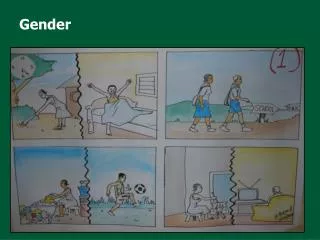
Social constructionist theory • The way people see and understand the world is constructed. • There is no objective reality. • Social context must always be taken into account.
Interpretation of biological sex influences the way a child is treated. • The way the child is treated leads to the development of gender role behaviour and gender identity.
Labelling • Labelling a baby as ‘boy’ or ‘girl’ influences behaviour towards the baby. • Smith and Lloyd (1978) found the same baby was treated differently depending on how they were dressed and the name they had.
Masculinity and femininity • Ideas about ‘manliness’ and ‘womanliness’ are different between cultures • And change over time.
Social role theory • Eagly and Wood (1999) • Men and women are assigned to roles • Man = hunter • Woman = homemaker • Due to physical differences • Psychological differences (aggressive, empathiser) follow.
Debate • If the differences are brought about due to selective pressure (evolutionary theory) – • They are for the purpose of survival • Are innate • They are biologically determined • If the differences are socially constructed • They are more flexible (free will)
Key points and research • Be aware of the David Reimer case study • And how this suggests that gender identity is biologically determined • Which goes against Money and Erhardt’s theory • The biosocial theory argues that behaivoural differences arise from interactions between biology and socialisation
Key points continued • Social constructionist argue that ideas about gender are made rather than biologically programmed. • Language is important • Media is important • Changes between cultures and over time