
SlideServe
Menu
Préférences
© SlideServe · v2026

RFIDs

serafina-mauro avatar
9 diapositives · 232 Views · Nov 20, 2014

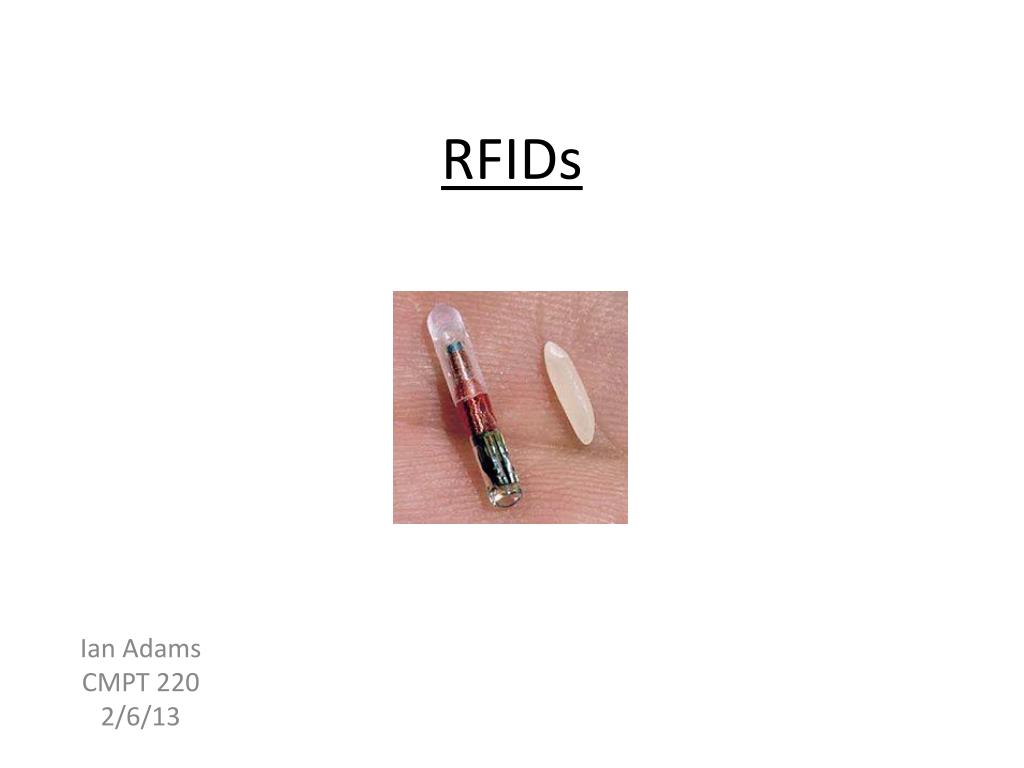
RFID, or Radio Frequency Identification, is a wireless technology that tracks and identifies objects using tags. Operated within a vast frequency range (100 kHz - 10 GHz), RFIDs can store from 128 bytes to 128 KB of data. There are three primary types of RFID systems: Passive Reader Active Tag (PRAT), Active Reader Passive Tag (ARPT), and Active Reader Active Tag (ARAT), each with its unique functions. Despite their advantages in various applications, RFIDs raise concerns regarding privacy, interference, and potential data security risks.
RFIDs - slide 1
01 / 9RFIDs
1 / 17

Télécharger la présentation

RFIDs
Une image / un lien ci-dessous est fourni (tel quel) pour télécharger la présentation

Politique de téléchargement : le contenu du site vous est fourni TEL QUEL pour votre information et votre usage personnel ; il ne peut être vendu, concédé sous licence ni partagé sur d’autres sites sans l’accord de son auteur.Le contenu vous est fourni TEL QUEL, pour votre information et votre usage personnel uniquement. Téléchargez la présentation en cliquant sur ce lien. Lors du téléchargement, si vous ne parvenez pas à télécharger une présentation, l’éditeur a peut-être supprimé le fichier de son serveur.Pendant le téléchargement, si vous ne parvenez pas à obtenir une présentation, le fichier a peut-être été supprimé par l’éditeur.

F I N

Plus de contenu associé

Transcription de la présentation
  1. RFIDs Ian Adams CMPT 220 2/6/13

  2. What are RFIDs • RFID stands for Radio Frequency Identification • Wireless radio frequency system used to track, identify and transfer data from a tag to an object • Used in people, animals, libraries, warehouses, transportation, stores, credit cards, passports, and many other things • Operated anywhere from 100Khz-10GHz Range • Can store anywhere from 128B of data to 128KB

  3. Terminology • Tag – Also known as a label, attached to an object that is to be identified • Reader – Also known as an interrogators, is a two way radio transmitter/receiver that sends a signal to the Tag and receives its resonce.

  4. Different Types of RFIDs • Passive Reader Active Tag (PRAT) – the system uses a passive reader which can only read active tags. • The tags are battery operated and are transmit only. The Reader in this case acts only as a receiver.

  5. Different Types of RFIDs • Active Reader Passive Tag (ARPT) – The reader sends signals to a Tag and receives the reply. • Known as Passive RFID • Most common in terms of variety. • In most ways, inferior to ARAT.

  6. Different Types of RFIDs • Active Reader Active Tag (ARAT) – The reader and Tag are both active. Also known as a Battery Assisted Passive. Tag has a Battery and is Passive until “awakened” by a Reader, at which point the Battery powers the Tag • Known as Active RFID • EZ-Pass, Warehouses, Large Farms • Best used when numerous objects need to be tagged and read. • Good in Biometric uses.

  7. Limitations • The smaller the RFID, the weaker the signal. • The more RFIDs, the more Radio Traffic, interference. • High Temperatures can cause the glue used in the RFID (holds the Integrated Circuit to the Circuit Board) to come undone and render the RFID useless.

  8. Concerns • Privacy. • Data on the Radio signals • Swiping a Credit Card without user knowing • Government Control. Big Brother • If Everything has an RFID, ID of everything and everyone is always known. • Radiation. • Just like those who fear Cell Phones and/or Microwaves, etc.

  9. Bibliography • http://en.wikipedia.org/wiki/RFID • http://www.stitcs.com/en/RFID/Active%20vs%20Passive%20RFID.pdf • http://en.wikipedia.org/wiki/Ez_pass • http://auto.howstuffworks.com/e-zpass2.htm • http://www.rfidwikipedia.org/index.php/Main_Page