Understanding Employee Engagement: The Key to High Performance and Organizational Success
Employee engagement is the process of guiding individuals to willingly contribute to the continuous success and performance of an organization. The types of employees include engaged workers who are passionate and connected to their company, non-engaged workers who are merely going through the motions, and actively disengaged workers who undermine their colleagues. Effective leaders play a crucial role in enhancing commitment by demonstrating honesty, responsibility, and care for their team. Understanding these dynamics is essential for fostering a productive workplace.

Understanding Employee Engagement: The Key to High Performance and Organizational Success
E N D
Presentation Transcript
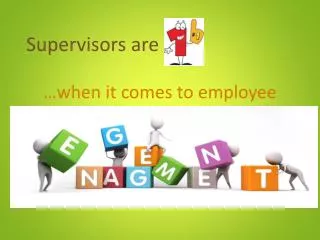
…when it comes to employee Supervisors are
What is engagement? Engagement is the process of leading people by enabling them to want to do whatever is necessary to ensure the continuous high performance and successof the organization. Scarlett Surveys International
What is engagement? Engagement is the process of leading people by enabling them to want to do whatever is necessary to ensure the continuous high performance and successof the organization. Source: Scarlett Surveys International More than 1 in 10 employees are fully disengaged Source: Corporate Leadership Council
The Three Types of Employees 1. Engaged: Employees work with passion and feel a profound connection to their company. They drive innovation and move the organization forward. 2. Non Engaged: Employees are essentially “checked out.” They’re sleepwalking through their workday, putting time—but not energy or passion—into their work. 3. Actively Disengaged: employees aren’t just unhappy at work: they’re busy acting out their unhappiness. Every day, these workers undermine what their engaged coworkers accomplish.
Leaders Are a “Force Multiplier” of Commitment • Here are some leader characteristics that research has shown to have a powerful impact on commitment: • The Leader: • Accepts responsibility for successes and failures • Cares about employees • Puts people in the right roles at the right time • Demonstrates honesty and integrity • Adapts to changing circumstances • Appropriately handles crises • Breaks down projects into manageable components • Demonstrates passion to succeed • Holds people accountable • Listens carefully to views and opinions • Makes sacrifices for direct reports • Respects employees as individuals • Inspires others