
Power Consumption and Efficiency in Wireless Network Protocols

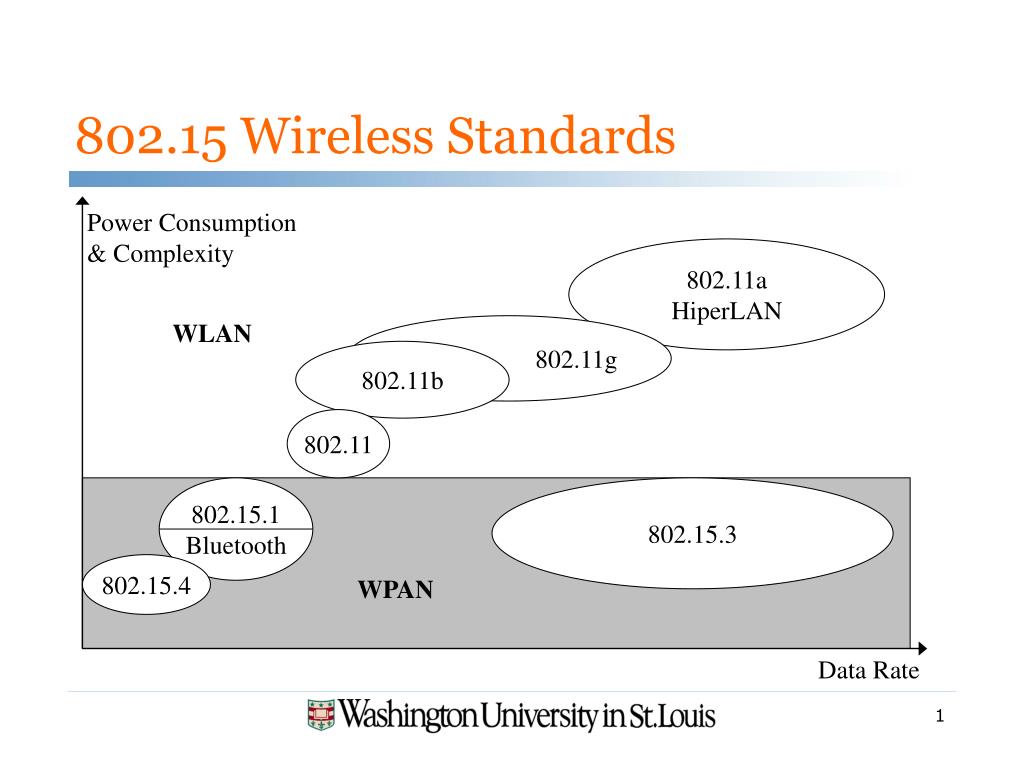
This article explores the power consumption and complexity of various wireless network protocols including 802.11a, 802.11b, 802.11g, and Bluetooth standards (802.15). It details the role of backbone and leaf nodes in ad-hoc networks, emphasizing energy-efficient communication through topology control protocols. Techniques such as asynchronous and synchronous sleep schedulers are discussed, showcasing how they help maintain connectivity while reducing power usage. Examples like BMAC, SMAC, and CBTC illustrate effective approaches in managing data transmission and energy conservation across different network frameworks.
Télécharger la présentation 
Politique de téléchargement : le contenu du site vous est fourni TEL QUEL pour votre information et votre usage personnel ; il ne peut être vendu, concédé sous licence ni partagé sur d’autres sites sans l’accord de son auteur.Le contenu vous est fourni TEL QUEL, pour votre information et votre usage personnel uniquement. Téléchargez la présentation en cliquant sur ce lien. Lors du téléchargement, si vous ne parvenez pas à télécharger une présentation, l’éditeur a peut-être supprimé le fichier de son serveur.Pendant le téléchargement, si vous ne parvenez pas à obtenir une présentation, le fichier a peut-être été supprimé par l’éditeur.
F I N