Understanding Population Dynamics: Methods for Studying Kelp and Mobile Species
This study explores various methods used to monitor and assess the populations of marine organisms, including kelp and more mobile species. We introduced kelp into a lab environment, visually identified and collected organisms, sorted them, and measured their abundance to evaluate species richness and evenness. For mobile species, techniques like tagging devices and sensor networks were employed. The mark-recapture method highlights how encountering the same individual can provide insight into population sizes. Other methods include satellite tagging, genetics, and photo identification.

Understanding Population Dynamics: Methods for Studying Kelp and Mobile Species
E N D
Presentation Transcript
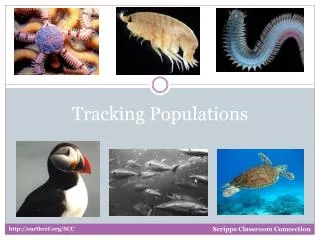
Tracking Populations http://earthref.org/SCC
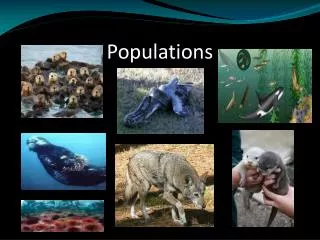
Populations on a kelp holdfast • How did we study those populations? • Brought kelp into lab • Visually spotted them • Pulled them off the kelp • Sorted them into another container • Measured abundance of each taxa • Assessed species richness/eveness http://earthref.org/SCC
What about more mobile species? • How do we study their populations? • Tag devices • Sensor Networks http://earthref.org/SCC
Mark-Recapture Do you see all your friends in school everyday? When you see someone you’ve never seen before what does this make you think about the size of your school? The number of repeat encounters you have with friends each day is related to the size of your school. http://earthref.org/SCC
Mark-Recapture • How many times you see the same person is related to how big your school population is. • Same goes for animal populations. • But you know what your friends look like. • Need to ID animals http://earthref.org/SCC
Mark-Recapture • Each time you mark an animal and recapture it, this tells you something about the population size. • Fish Tagging Lab http://earthref.org/SCC
More ways to study populations • Satellite Tagging & Tracking • Genetics • Photo ID Mark Recapture http://earthref.org/SCC