Plot Terms
This comprehensive guide details essential literary terms and definitions that are crucial for understanding storytelling. Key concepts such as point of view, character types (static, dynamic, round, flat), plot elements including climax and resolution, as well as the significance of themes and mood are explained. Recognizing these elements enhances both reading comprehension and writing skills, providing insight into characters' conflicts (man vs. man, self, nature, society) and the overarching message of a narrative.

Plot Terms
E N D
Presentation Transcript
Plot Terms Definitions aligned with class pre-assessment
Point of View- the perspective from which a story is told • 1stperson- a character from within the text is narrating the story and uses key pronouns such as I, me, my, we. • 3rd person- the narrator is outside of the story, uses pronouns such as he, she, they
Characters • Static- a character that does not change or grow (stays the same). • Dynamic- a character who undergoes an important inner change, as in a change in personality or attitude. • Round- a character whose personality and motives are fully developed by the author. • Flat- a minor character in fiction who does not undergo change or growth.
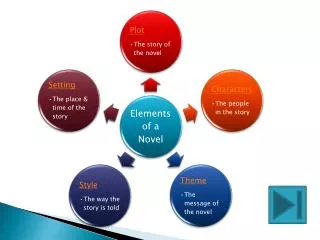
Characters continued • Antagonist- the character who opposes the protagonist • Protagonist- the main character in a literary work
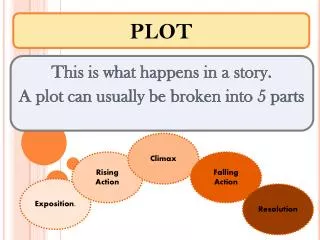
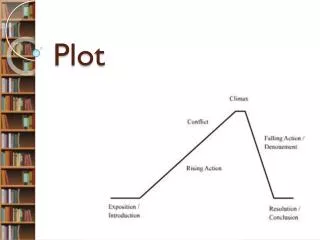
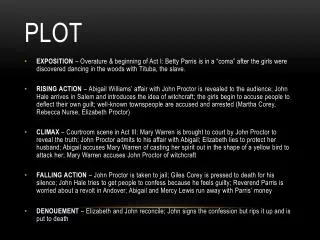
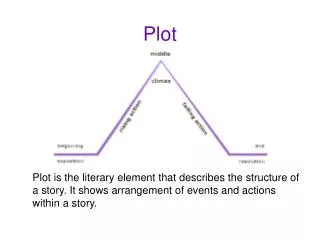
Climax- plot events reach a critical point, conflict is at its peak, rising action meets its highest point. • Setting- the time, place and mood of a story.
Mood- the feeling a reader experiences when reading, an element of the setting. • Theme- what the writer wants you to remember most. • Not directly stated • View about life and how people behave; the greater, deeper meaning!
Resolution- a satisfactory ending to the conflicts. • Conflict- a struggle between opposing forces. • Man v. man • Man v. self • Man v. nature • Man v. society