Download
1 / 4
50 likes | 195 Vues
This article provides an in-depth classification of plants based on their lifecycle stages, including annuals, biennials, and perennials. Annuals complete their lifecycle in one year, with examples like corn and wheat. Biennials take two years to finish their lifecycle, storing energy in the first year and reproducing in the second, with examples including celery and asparagus. Perennials continue to grow for more than two years, developing through and beyond their reproductive phases. Explore examples of each plant type and understand their growth cycles.

E N D
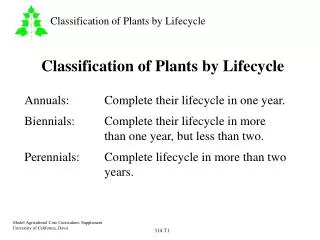
Classification of Plants by Lifecycle Annuals: Complete their lifecycle in one year. Biennials: Complete their lifecycle in more than one year, but less than two. Perennials: Complete lifecycle in more than two years.
Annuals • Plants which complete their lifecycle in one year. • Some examples of annuals are: • Corn • Wheat • Annual flowers
Biennials • Plants which complete their lifecycle in more than one year, but less than two. • Energy is stored by the plant during its first year and used during the reproductive stage in the second year. • Some examples of biennials are: • Celery --Parsnip --Parsley • Asparagus --Sugar beets
Perennials • Plants which grow for more than two years. • The plant continues to develop during and after the reproductive phase. • Some examples of perennials are: • Bermuda grass • All shrubs • All trees