Download
1 / 51
510 likes | 624 Vues
Explore the fascinating world of Ancient Egypt, from the annual flooding of the Nile to the intricate social hierarchies and daily lives of its people. Learn about significant figures like Tutankhamun and Ramses II, the processes of mummification, and the rich mythological beliefs surrounding the afterlife. Discover the art of making beer and wine, and delve into the significance of hieroglyphics and the Rosetta Stone. Join us on this journey through time to understand how Ancient Egyptian civilization shaped history and continues to influence our world today.

E N D
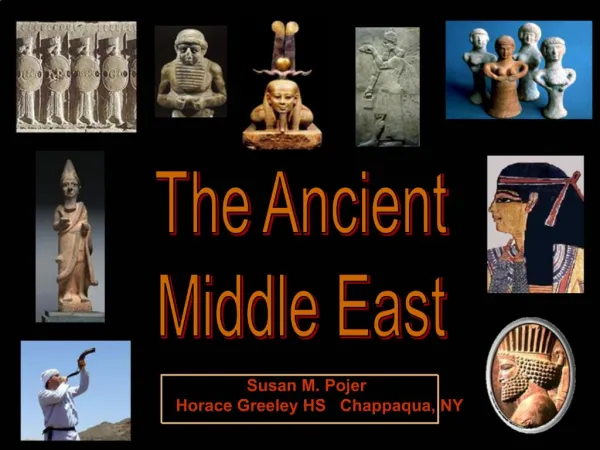
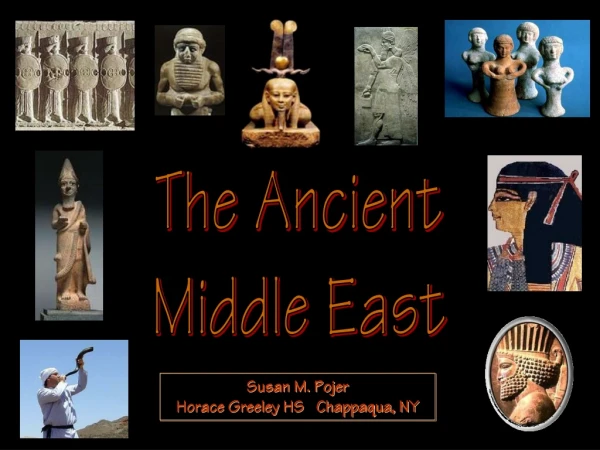
The Ancient Middle East Susan M. PojerHorace Greeley HS Chappaqua, NY
2. The Ancient Egyptians
Menes: Unifier of Upper & Lower Egypt c. 3050 B. C. E. ?
Ancient Egyptian Housing Middle Class Homes Peasant Homes
An Egyptian Woman’s “Must-Haves” Mirror Perfume Whigs
Some Famous Egyptian Pharaohs Tutankhamon1336-1327 B. C. E. Thutmose III1504-1450 B. C. E. Ramses II1279-1212 B. C. E.
Papyrus Paper Hieratic Scroll Piece Papyrus Plant
Egyptian Math & Draftsmenship What number is this?
Hieroglyphics “Alphabet” 24 “letters” + 700 phonetic symbols
Egyptian Creation Myth The Goddess Nut
Egyptian Gods & Goddesses: Osiris Isis Horus
Preparations for the Underworld ANUBIS weighs the dead person’s heart against a feather. Priests protected your KA, or soul-spirit
Materials Used in Mummification 1. Linen 6. Natron2. Sawdust 7. Onion3. Lichen 8. Nile Mud4. Beeswax 9. Linen Pads5. Resin 10. Frankinsense
Egyptian Mummies Ramses II1279-1212 B. C. E. Seti I1291-1278 B. C. E. Queen Tiye, wife of Amenhotep II1210-1200 B. C. E.
Journey to the Underworld The dead travel on the “Solar Bark.” A boat for the journey is provided for a dead pharaoh in his tomb.
The Final Judgement Anubis Horus Osiris
King Tutankhamon’s Death Mask 1336-1327 B. C. E.
The Valley of the Queens Temple of Queen Hatshepsut 1473-1458 B. C.
Ankhenaton: First Monotheist? 1352-1336 B. C. E.
Abu Simbel:Monument to Ramses II 1279-1213 B. C.