

SlideServe
Menu
Préférences
© SlideServe · v2026

Body Waves: S wave

sierra avatar
56 diapositives · 819 Views · Jul 13, 2014

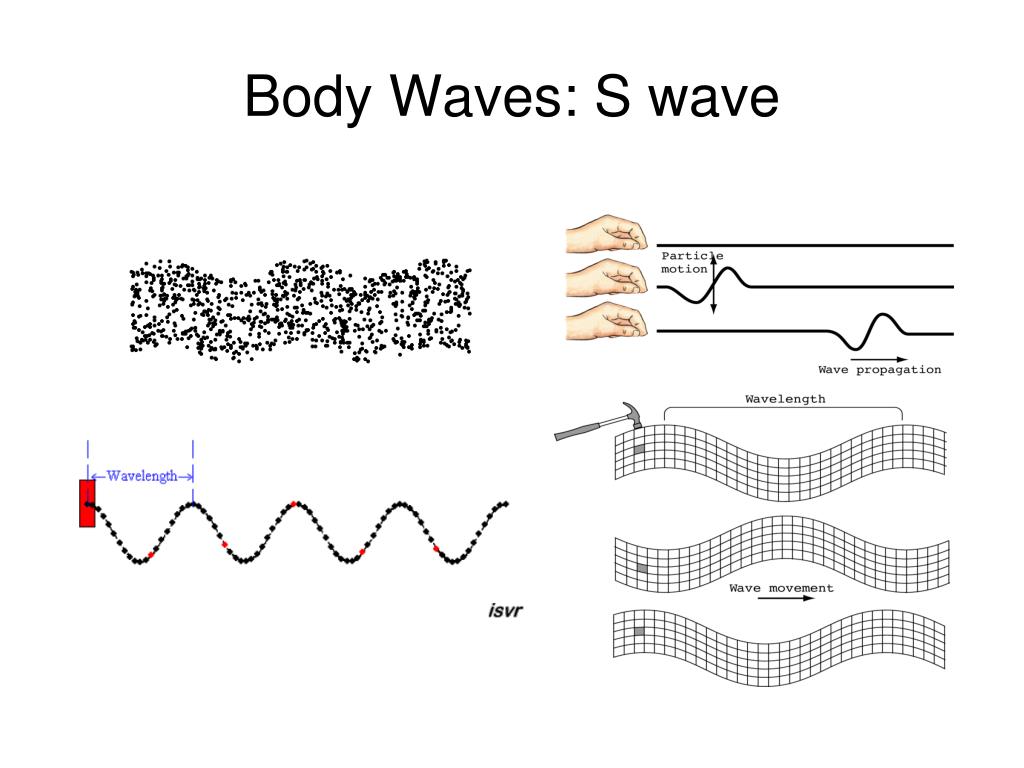
Body Waves: S wave. Surface Waves. Rayleigh waves Love waves Free body oscillations. >. From IRIS. Free Body Oscillations. Torroidal Modes. Spherical Modes. h. USGS. Foreshocks, Aftershocks. USGS. Bolivar Peninsula, Texas. Bolivar Peninsula, Texas. Earthquake Magnitude.
Body Waves: S wave - slide 1
01 / 56Body Waves: S wave
1 / 17

Télécharger la présentation

Body Waves: S wave
Une image / un lien ci-dessous est fourni (tel quel) pour télécharger la présentation

Politique de téléchargement : le contenu du site vous est fourni TEL QUEL pour votre information et votre usage personnel ; il ne peut être vendu, concédé sous licence ni partagé sur d’autres sites sans l’accord de son auteur.Le contenu vous est fourni TEL QUEL, pour votre information et votre usage personnel uniquement. Téléchargez la présentation en cliquant sur ce lien. Lors du téléchargement, si vous ne parvenez pas à télécharger une présentation, l’éditeur a peut-être supprimé le fichier de son serveur.Pendant le téléchargement, si vous ne parvenez pas à obtenir une présentation, le fichier a peut-être été supprimé par l’éditeur.

F I N

Plus de contenu associé

Transcription de la présentation
  1. Body Waves: S wave

  2. Surface Waves Rayleigh waves Love waves Free body oscillations >

  3. From IRIS Free Body Oscillations Torroidal Modes Spherical Modes

  4. h USGS Foreshocks, Aftershocks

  5. USGS

  6. Bolivar Peninsula, Texas

  7. Bolivar Peninsula, Texas

  8. Earthquake Magnitude

  9. Richter Scale, ML

  10. Each increment in log scale implies 10-fold change in linear scale

  11. ML is logarithmic inamplitude of shaking • i.e., if A = 2 cm for ML = 5, what is A for ML = 6?

  12. ML is logarithmic inamplitude of shaking • i.e., if A = 2 cm for ML = 5, what is A for ML = 6?A = 20 cm

  13. ML is logarithmic inamplitude of shaking • i.e., if A = 2 cm for ML = 5, what is A for ML = 6?A = 20 cm • i.e., ifA = 10 μm for ML = 3.7,what is A for ML = 1.7?

  14. ML is logarithmic inamplitude of shaking • i.e., if A = 2 cm for ML = 5, what is A for ML = 6?A = 20 cm • i.e., ifA = 10 μm for ML = 3.7,what is A for ML = 1.7?A = 0.1 μm

  15. ML is logarithmic to base 32 for energy of earthquake • i.e., how much more energy does ML = 5 earthquake have than ML = 4? M=5 E M=4

  16. ML is logarithmic to base 32 for energy of earthquake • i.e., how much more energy does ML = 5 earthquake have than ML = 4?32 × more energy! M=5 E M=4

  17. ML is logarithmic to base 32 for energy of earthquake • i.e., how much more energy does ML = 5 earthquake have than ML = 4?32 × more energy! • i.e., how much more energy does ML = 6.5 earthquake have than ML = 4.5?

  18. ML is logarithmic to base 32 for energy of earthquake • i.e., how much more energy does ML = 5 earthquake have than ML = 4?32 × more energy! • i.e., how much more energy does ML = 6.5 earthquake have than ML = 4.5?32 × 32 ~ 1,000 × more energy! • Rule: energy increases by order of 1,000 for every increment of 2 in Magnitude

  19. Frequency Spectrum of Waves

  20. Analogy: Music

  21. Analogy: Music • Earthquake waves = mixture of S, P, surface waves of various frequencies • Music = mixture of P waves of various frequencies • Bass = low frequency • Midrange = medium frequency • Treble = high frequency • Most important point: big earthquakes make different music than small earthquakes

  22. Bass Midrange Treble

  23. Problem with measuring large earthquakes

  24. Richter scale tuned to these earthquakes Small earthquake Big earthquake Louder Longer Lower frequency

  25. Saturation

  26. Moment Magnitude Scale, MW Energy ~ Rupture Area × Slip Distance × Rock Strength

  27. Gutenberg-Richter • Plots LOG(frequency) or LOG(RI) vs. magnitude RI (years) Magnitude M

  28. Gutenberg-Richter RI (years) Magnitude M

  29. Magnitude vs. Intensity

  30. Earthquake Intensity

  31. 1811 New Madrid (M=7.5) 1906 San Francisco(M = 8.3)

  32. Epicenter

  33. S waves Close L waves R waves Far Auroville Earth Institute

  34. Amplification Sedimentary basin forming

  35. Amplification from wave slowing Energy depends on: Speed Amplitude

  36. Amplification from focusing

  37. Amplification from reflection

  38. Example: 1989 Loma Prieta earthquake, California Fort Mason built on solid bedrock Marina district built on fill

  39. Amplification damage, Marina District, San Francisco