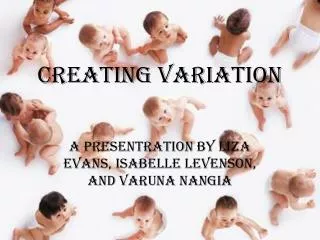
Creating Variation
This presentation by Liza Evans, Isabelle Levenson, and Varuna Nangia explores the fascinating process of meiosis, which transforms diploid cells into haploid gametes, introducing genetic diversity in offspring. It covers key phases of meiosis, highlights spermatogenesis and oogenesis, and discusses the implications of genomic imprinting and epigenetics on development and metabolism. Engaging discussions and interactive elements provide a clear understanding of how these processes impact evolution and genetics. Join us on this enlightening journey!

Creating Variation
E N D
Presentation Transcript
Creating Variation A Presentration by Liza Evans, Isabelle Levenson, and VarunaNangia
Meiosis Meiosis is a process which converts diploid cells to haploid gametes and which causes a change in the genetic information of those cells to create diversity in the offspring.
Turn to the person next to you and explain the phases of meiosis
OUR Favorite Meiosis Song
Genomic Imprinting The process that would have rocked Mendel’s world, and Darwin’s too
Many of such genes involve development of embryo as well as growth and metabolism.But Why? It all has to do with promiscuous cats, Darwin and the genetic conflict hypothesis.