Photosynthesis
Explore the intricate process of photosynthesis, which occurs in the chloroplasts of leaf cells. This overview discusses the roles of chlorophyll and other pigments in capturing light energy, the light-dependent reactions that split water to produce ATP and NADPH, and the light-independent Calvin Cycle that converts CO2 into glucose. Key components like ADP, NADP, and oxygen production are highlighted. Learn how energy from sunlight is transformed into chemical energy, fueling plant growth and contributing to Earth's oxygen supply.

Photosynthesis
E N D
Presentation Transcript
Photosynthesis An overview
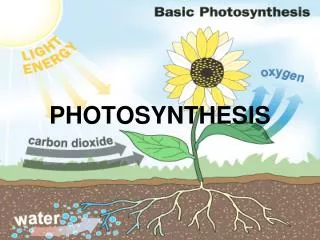
Photosynthesis + H2O CO2 Energy ATP and NADPH2 Which splits water Light is Adsorbed By Chlorophyll Calvin Cycle ADP NADP Chloroplast Used Energy and is recycled. O2 + C6H12O6 Light Reaction Dark Reaction
Needs: Light Water ADP NADP Pigments Thylakoid membranes of the chloroplast Products ATP NADPH oxygen Light Dependent Reaction
The Process Chlorophyll and other pigments take in light and H2O. They strip off the protons and release Oxygen. The H+ (protons) are used to turn ADP into ATP. The electrons are used to turn NADP into NADPH
Light Independent Reactions • Process • C o2 enters the stomates of the leaf and the stroma of the chloroplast • It binds with RuBP using Rubisco enzyme to make PGAL. • Energy comes from ATP and NADPH • PGAL combines with more carbon to make sugar
Needs NADPH ATP CO2 Stroma of chloroplast Product Glucose and other organic compounds Calvin Cycle/Light Independent
Photosynthesis + H2O CO2 Energy ATP and NADPH2 Which splits water Light is Adsorbed By Chlorophyll Calvin Cycle ADP NADP Chloroplast Used Energy and is recycled. O2 + C6H12O6 Light Reaction Dark Reaction