Download
1 / 12
120 likes | 249 Vues
This chapter discusses the establishment of healthy eating patterns based on extensive research, highlighting the benefits of the DASH and Mediterranean diets, as well as vegetarian adaptations. It emphasizes the importance of adhering to USDA Food Patterns and the DASH Eating Plan to promote overall health and reduce chronic disease risks. Key updates include revised food group classifications, increased seafood consumption recommendations, and guidance for specific population groups. It encourages a socio-ecological approach to improve national nutrition and physical activity through community and governmental collaboration.

E N D
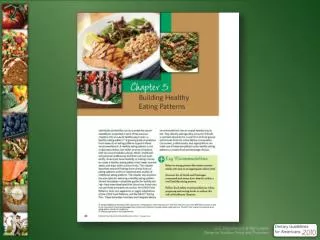
Chapter 5 newBuilding Healthy Eating Patterns • Research on overall eating patterns • Considerable evidence for health outcomes from DASH and traditional Mediterranean eating patterns • Some evidence for vegetarian • Common elements of healthy eating patterns identified • To promote health, follow USDA Food Patterns or DASH Eating Plan • Similar to each other and to the healthful eating patterns identified in the research • Follow food safety recommendations
USDA Food PatternsChanges for 2010 Dietary Guidelines • Vegetarian adaptations • Lacto-ovo and vegan • Two food groups renamed • “Meat & Beans” became “Protein Foods” • “Milk” became “Dairy Products” • Fortified soy milk included • Milk for 4- to 8-year-olds increased by ½ cup per day • At least 8 oz per week of seafood for adults • 3 to 6 oz for children • Vegetable subgroups • Amounts revised • “Orange” revised to “Red and Orange”
Chapter 6 newHelping Americans Make Healthy Choices • Current food and physical activity environment is influential—for better and for worse • All elements of society, have a role • Individuals and families • Communities • Business and industry • All levels of government • Work together to improve the Nation’s nutrition and physical activity
Socio-ecological Framework Adapted from Story M et al., Annu Rev Public Health 2008;29:253-272
Appendices • Guidance for Specific Population Groups • Key Consumer Behaviors and Potential Strategies for Professionals to use in Implementing the 2010 Dietary Guidelines new • Food Safety Principles and Guidance for Consumers • Using the Food Label new • Nutritional Goals for age-gender groups new • Estimated calories needs • USDA Food Patterns, Vegetarian Adaptations new, and DASH Eating Plan • EPA, DHA, and mercury content of seafood new • Food sources of nutrients of concern • Glossary
Additional Content Topics covered in sidebars • Definitions for overweight and obesity • Water • Fluoride • Food allergies and intolerances • Explanatory text • Beans and Peas • Whole and Refined Grains • Seafood
Summary • Dietary Guidelines for Americans, 2010 • Evidence-based nutritional guidance • Promote health • Reduce the risk of chronic diseases • Reduce the prevalence of overweight and obesity • Integrated set of advice for overall eating pattern • Consumer-friendly advice and tools coming
Resources • www.DietaryGuidelines.gov • Policy Document • Advisory Committee Report • Public Comments Database • www.NutritionEvidenceLibrary.gov