Discrete Ordinate Multiple Scattering Algorithm: ISSAC's Two-Stream Approach
Explore the Issacs Two-Stream Algorithm for discrete ordinate multiple scattering, designed for fast computations, albeit with lower accuracy. The algorithm’s performance varies with the number of streams—typically, 8 streams are recommended for most applications to balance speed and accuracy. Users can input solar irradiances from a file or utilize default values. The model requires settings for CO2 mixing ratios and vertical columns of water vapor and ozone for precise atmospheric simulations, making it a versatile tool for atmospheric researchers.

Discrete Ordinate Multiple Scattering Algorithm: ISSAC's Two-Stream Approach
E N D
Presentation Transcript
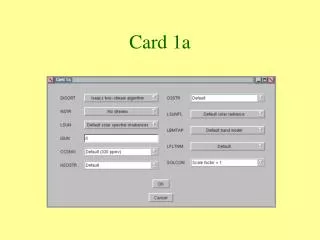
Discrete Ordinate Multiple Scattering Algorithm: Issacs Two-Stream Algorithm (fast but less accurate) Multiple Scattering Algorithm
Number of Streams to be used by DISORT – the higher the number the longer the run time 8 is a recommended value for most applications
Option to read solar irradiances from a file: Use default spectral solar irradiances Read from file (requires ISUN input)
Full Width Half Max FWHM of the triangular scanning function used to smooth the top of the atmosphere (TOA) solar irradiances (wavenumbers)
CO2 mixing ratio in ppmv: Inputs of zero or leaving it blank defaults to an input of 330 ppmv Recommended value is closer to 365 ppmv
Vertical Water Vapor Column: If blank or zero the default is used If a leading character of “g” is used before the number the units will be in g/cm2 (e.g., g 2 ) If a leading character of “a” is used the before the number the units will be in atm-cm Otherwise a numerical input will be considered a scaling factor applied to default water vapor column
Vertical Ozone Column: If blank or zero the default is used If a leading character of “g” is used before the number the units will be in g/cm2 (e.g., g 2 ) If a leading character of “a” is used the before the number the units will be in atm-cm
Solar Radiance Data File Option: Use Default Solar Radiance File Read in a Solar Radiance File
Band Model Option: Use Default Band Model Read in Band Model File
Instrument Filter Option: Use Default Filter Read in Instrument Function File