Catholic Reformation
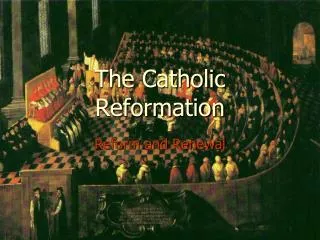
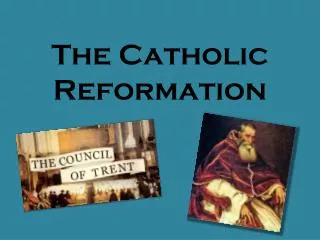
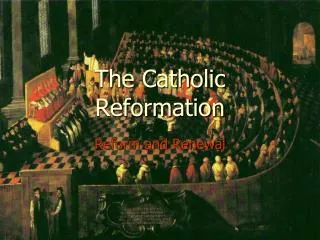
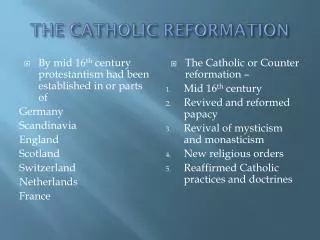
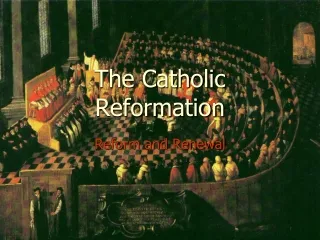
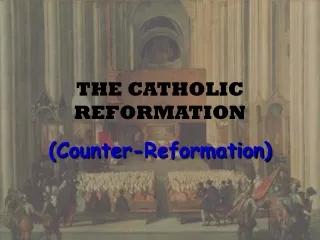
The Council of Trent (1545-1563) marked a pivotal moment in the Catholic Reformation. It aimed to address the challenges posed by Protestant reformers, clarify Church doctrine, and reinforce its internal structure. Key outcomes included the affirmation of Scripture and Tradition, the importance of grace in salvation, and addressing abuses like the sale of indulgences. The Council also instituted reforms in clerical education and discipline, shaping Catholic responses until the 1960s. New religious orders, such as the Jesuits and Vincentians, emerged, focusing on education and service to the poor.

Catholic Reformation
E N D
Presentation Transcript
Church Reform & Religious Communities Catholic Reformation
Council of Trent • 1545-1547; 1551-1552; 1562-1563 • Paul III; Julius III; Pius IV • Lutheran split 1530; Anglican split 1534 • Respond to Reformers, clarify doctrine, strengthen church from within, enhance uniformity and appeal • Anathema sit … Let him be condemned!
Walls, yes … bridges, no Anathema sit
Response to Reformers • Sola Scriptura • Scripture ANDTradition • Church alone can interpret scripture • Latin Vulgate is the ideal translation • “And for anyone who says scripture and tradition are not equal, let him be anathema.”
Justification/Salvation • Salvation Through Grace By Faith • Without grace, we are doomed … • BUT … we must cooperate with grace • Grace is only the beginning • Devotions and good works affirmed, but abuses (like selling indulgences) stopped • Faith AND works
Priesthood of All Believers • Hierarchy still stands • The “character” of orders is indelible (permanent, unchangeable, inerasable) • However … the clergy needs reform • Seminary in every diocese • Bishops must live in diocese • Priests and bishops must preach • Priestly celibacy
Other Results • Publications • Catechism • Breviary • Missal • Index of Forbidden Books • New religious orders; reform within others • Bulk of the changes/teachings/publications hold solid until 1960s, with Vatican II
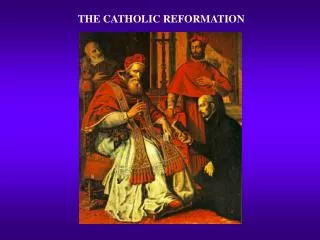
Society of Jesus (Jesuits) • Ignatius of Loyola (1491-1556) • Injured as soldier Soldier for Christ • Military background chain of command • Fourth Vow– absolute personal obedience to Pope • “The Spiritual Exercises” • Intellectuals, theologians, missionaries • Practical, this-world … not withdrawal, sacrifice • Task for “soldiers”: Combat Protestantism
Spiritual/Mystics • Teresa of Avila (1515-1582) • Doctor of the Church • “The Interior Castle” • Discalced Carmelites • John of the Cross
Vincentians/Charitys • Vincent de Paul (1581-1660) • Focus on the poor; preach to, teach commoners • Louise de Marillac Daughters of Charity • Bypass cloister rules by taking private annual vows
Christian Brothers • John Baptist de La Salle (1652-1719) • Educate poor children escape poverty, crime • Began classroom teaching (not private tutors) • Considered a founder of modern education
John Carroll • 1735-1815; elected bishop in 1789 (American Catholics feared foreign bishop) • Balanced democracy with Vatican loyalty • Began St. Mary’s Seminary (Baltimore), Georgetown College (DC), dioceses • 1790 – 30,000 American Catholics1815 – 200,000 American Catholics
Elizabeth Ann Seton • 1774-1821 • First American-born saint (canonized 1975) • Convert; began Baltimore school • Sisters of Charity (Emmitsburg) – first religious order begun in the U.S. • Credited with beginning the parochial school system
Others • Women’s Orders • Philippine Duchesne – Religious of Sacred Heart • Cornelia Connelly – began Society of Holy Child • Katharine Drexel – Blessed Sacrament sisters, helping poor blacks & Indians • Rose Hawthorne Lathrop – help incurable cancer • Colleges/Universities • Notre Dame (Holy Cross fathers); St. John’s (Benedictines); St. Mary’s, Texas (Marianists)