BATTERIES
Batteries play a crucial role in energy transformation, converting chemical energy into electrical energy through electrochemical cells. Initially explored by pioneers like Luigi Galvani and Alessandro Volta, the fundamental principles of batteries involve chemical reactions between different metals and electrolytes. These reactions create a flow of electrons, generating electric current. Batteries consist of stacked electrochemical cells, where the total voltage is the sum of individual cell voltages. Discover the difference between wet and dry cells and their applications in our daily lives.

BATTERIES
E N D
Presentation Transcript
What does a battery do? • Energy transformation: • Chemical energy – stored in chemical compounds Electrical energy – moving charged particles (e-)
History • Luigi Galvani – Italian physician studied frog anatomy • Brass hook held leg in place & other end touched iron railing. Leg twitched. • Believed the twitching of leg muscle due to “animal electricity” • Not true • simply demonstrated the electrical basis of nerve impulse
The First Battery • Alessandro Volta – reproduced Galvani ‘s results • Due to chemical reaction between the two metals & saline in frog’s leg muscle • Tested hypothesis by layering salt-water-soaked paper layered between Zn & Ag • Connected wires & produced current • More layers – more current
Electrochemical Cell • Device that transforms chemical energy into electrical energy • Electrodes – 2 different metals immersed in Electrolyte – substance that conducts electricity (salt water or acid) • Terminal - part of electrode above electrolyte, used to connect to circuit
Chemical Reaction - Redox • Electrolyte reacts with each electrode • One electrode loses electrons & becomes (+) {oxidized} • Other gains electrons & becomes (-) {reduced} • Opposite charges – difference in potential energy - voltage - causes electrons to move from (+) anode to (-) cathode through circuit • Electrons move through the electrolyte from one electrode to other (negative electrode through electrolyte to positive electrode)
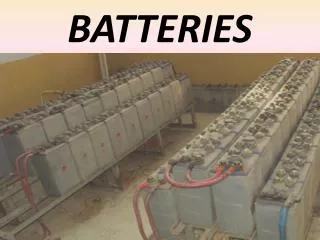
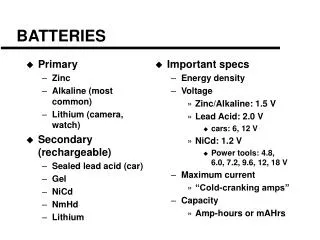
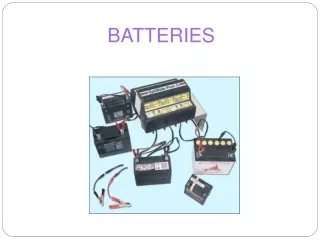
BATTERY = several stacked electrochemical cells • Total voltage = all the individual cell voltages added together • Wet Cells – electrolyte Dry Cells – electrolyte is liquid – salt water is a paste (KOH or NaOH) or acid (car battery) (AAA, AA, C, D - alkaline)